How Employers Can Create a Culture of Belonging for Employees with Disabilities
How Employers Can Create a Culture of Belonging for Employees with Disabilities 9 Min. Read When your workplace truly embraces disability inclusion, something magical happens – performance soars, turnover plummets, and innovation flourishes. Creating a culture of belonging for employees with disabilities isn’t just a moral imperative; it’s a strategic advantage that drives measurable business […]
How Employers Can Create a Culture of Belonging for Employees with Disabilities
- 9 Min. Read
When your workplace truly embraces disability inclusion, something magical happens – performance soars, turnover plummets, and innovation flourishes. Creating a culture of belonging for employees with disabilities isn’t just a moral imperative; it’s a strategic advantage that drives measurable business success.
- • The Business Case for Disability Inclusion
- • Leadership’s Role in Creating Belonging
- • Building Inclusive Policies and Practices
- • Creating Accessible Work Environments
- • Fostering Trust and Open Communication
- • Final Thoughts: Creating Lasting Change
To create a culture of belonging for employees with disabilities, organizations need to implement comprehensive strategies including strong leadership commitment, inclusive policies, accessible workspaces, and robust support systems. This approach should be integrated into the core business strategy and supported by measurable accountability metrics.
The impact of belonging is profound: when employees feel they truly belong, job performance increases by 56%, turnover risk drops by 50%, and sick days decrease by 75% (Source).
As a leader in workplace culture analysis, I’ve seen firsthand how diversity and inclusion initiatives transform organizations. The key lies in creating what we at Most Loved Workplace® call “emotional connectedness” – that powerful sense of belonging that makes employees feel valued, respected, and empowered to contribute their unique talents.
Let’s explore how you can build this culture of belonging through proven strategies that align with both your business goals and your commitment to maintaining a strong culture. Whether you’re just starting your inclusion journey or looking to enhance existing programs, this guide will provide you with actionable steps backed by research and real-world success stories.
The Business Case for Disability Inclusion
Let’s talk numbers – because in business, love and belonging need to translate to measurable results. The data supporting disability inclusion is compelling, and it’s transforming how forward-thinking organizations approach workplace culture.
“When employees feel they belong, they’re three times more likely to look forward to coming to work and five times more likely to want to stay at their company long-term” (Source).
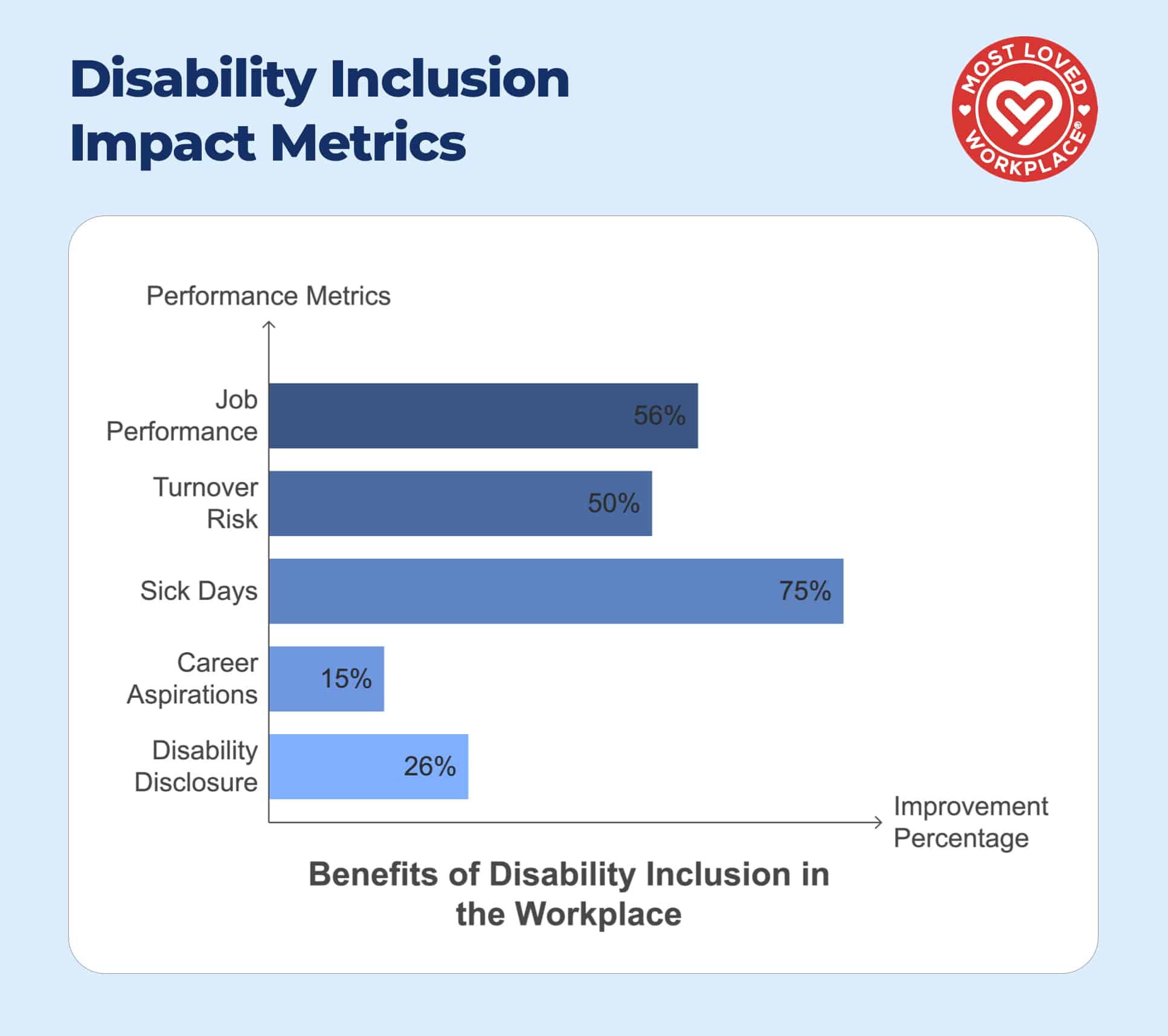
As we’ve discovered through our Most Loved Workplace® research, creating a culture of belonging isn’t just about doing what’s right – it’s about building a more successful, sustainable business. Here’s what the data tells us about the impact of inclusive practices:
|
Metric
|
Impact
|
|---|---|
|
Employee Retention
|
2.5% decrease in attrition for every 5-point increase in inclusion scores
|
|
Job Performance
|
56% increase when employees feel strong belonging
|
|
Sick Days
|
75% reduction with enhanced belonging
|
These numbers align perfectly with what we’ve seen in our Most Loved Workplace® research, where companies that prioritize inclusion consistently outperform their peers. But the benefits extend beyond metrics:
- • Enhanced Innovation: Diverse perspectives lead to better problem-solving and creativity
- • Improved Customer Understanding: A diverse workforce better represents and understands your customer base
- • Stronger Employer Brand: Inclusive cultures attract top talent across all demographics
- • Reduced Legal Risk: Proactive inclusion reduces discrimination-related issues
Think about it – when you create an environment where every employee feels valued and supported, you’re not just doing good; you’re doing smart business. And in today’s competitive landscape, that’s a difference-maker you can’t afford to ignore.
Become a Most Loved Workplace
Leadership’s Role in Creating Belonging
Let me be clear: creating a culture of belonging starts at the top. As a leadership expert, I’ve seen how executive commitment can make or break inclusion initiatives. It’s not enough to simply support these programs – leaders must embody them.
Research shows that when leaders disclose their own disabilities, employees with disabilities are 15% more likely to have higher career aspirations and 26% more likely to be open about their own disabilities (Source).
At Most Loved Workplace®, we’ve identified key leadership actions that drive successful disability inclusion:
- • Strategic Integration: Embedding disability inclusion into core business strategy and KPIs
- • Visible Commitment: Regularly communicating about inclusion initiatives and progress
- • Resource Allocation: Providing necessary budget and staffing for inclusion programs
- • Personal Involvement: Participating in disability ERGs and inclusion events
- • Accountability: Setting and tracking measurable inclusion goals
“Strong and visible leadership commitment is crucial for fostering a culture of inclusion. Leaders must treat inclusion as a strategic priority, integrating it into the overall business strategy.”
As discussed in our guide on leadership in creating a loved workplace, effective leaders understand that inclusion isn’t a separate initiative – it’s fundamental to business success. Here’s how leaders can demonstrate this commitment:
Action Steps for Leaders
- Regularly share personal stories and experiences related to disability and inclusion
- Include disability inclusion metrics in executive scorecards
- Ensure accessibility is considered in all business decisions
- Mentor employees with disabilities
- Champion disability inclusion in industry forums and events
Remember, love in leadership isn’t just about feeling good – it’s about taking concrete actions that demonstrate commitment to your people. When leaders show up authentically and consistently for disability inclusion, it creates a ripple effect throughout the organization.
Building Inclusive Policies and Practices
Creating a culture of belonging requires more than good intentions – it demands robust policies and practices that support real inclusion. Let’s explore how to build these foundational elements that make your workplace truly accessible and inclusive.
Comprehensive Policy Framework
Your inclusion policies should be clear, accessible, and comprehensive. Here’s what they need to cover:
- • Reasonable Accommodations: Clear processes for requesting and implementing workplace adjustments
- • Flexible Working: Options for remote work, modified schedules, and customized breaks
- • Anti-discrimination: Explicit protection against disability-based discrimination
- • Communication Guidelines: Standards for inclusive language and interaction
- • Career Development: Equal opportunity policies for advancement and training
Employee Resource Groups (ERGs)
The impact of ERGs is significant: 83% of employees in effective ERGs report positive inclusion scores, compared to just 59% in ineffective groups (Source).
|
ERG Component
|
Benefits
|
|---|---|
|
Executive Sponsorship
|
Direct line to leadership, increased visibility, resource access
|
|
Regular Programming
|
Consistent engagement, educational opportunities, community building
|
|
Feedback Channels
|
Policy input, workplace improvement suggestions, issue identification
|
|
Mentorship Programs
|
Career development, leadership pipeline, knowledge sharing
|
Training and Awareness
Here’s something fascinating: organizations that provide accessible inclusion training see a 35% increase in disability disclosure rates (Source). At Most Loved Workplace®, we’ve found that effective training programs should:
- Go beyond basic awareness to provide practical inclusion skills
- Include real-world scenarios and solutions
- Offer regular refresher sessions
- Incorporate feedback from employees with disabilities
- Address both visible and invisible disabilities
As we discuss in our guide to improving company culture, policies and practices must evolve with your organization. Regular review and updates ensure they continue to serve your employees effectively.
Support Systems
Remember, love in the workplace means creating systems that actively support your people. Consider implementing:
- • Dedicated disability inclusion specialists
- • Confidential reporting mechanisms
- • Employee assistance programs
- • Workplace adjustment funds
- • Return-to-work support programs
Creating Accessible Work Environments
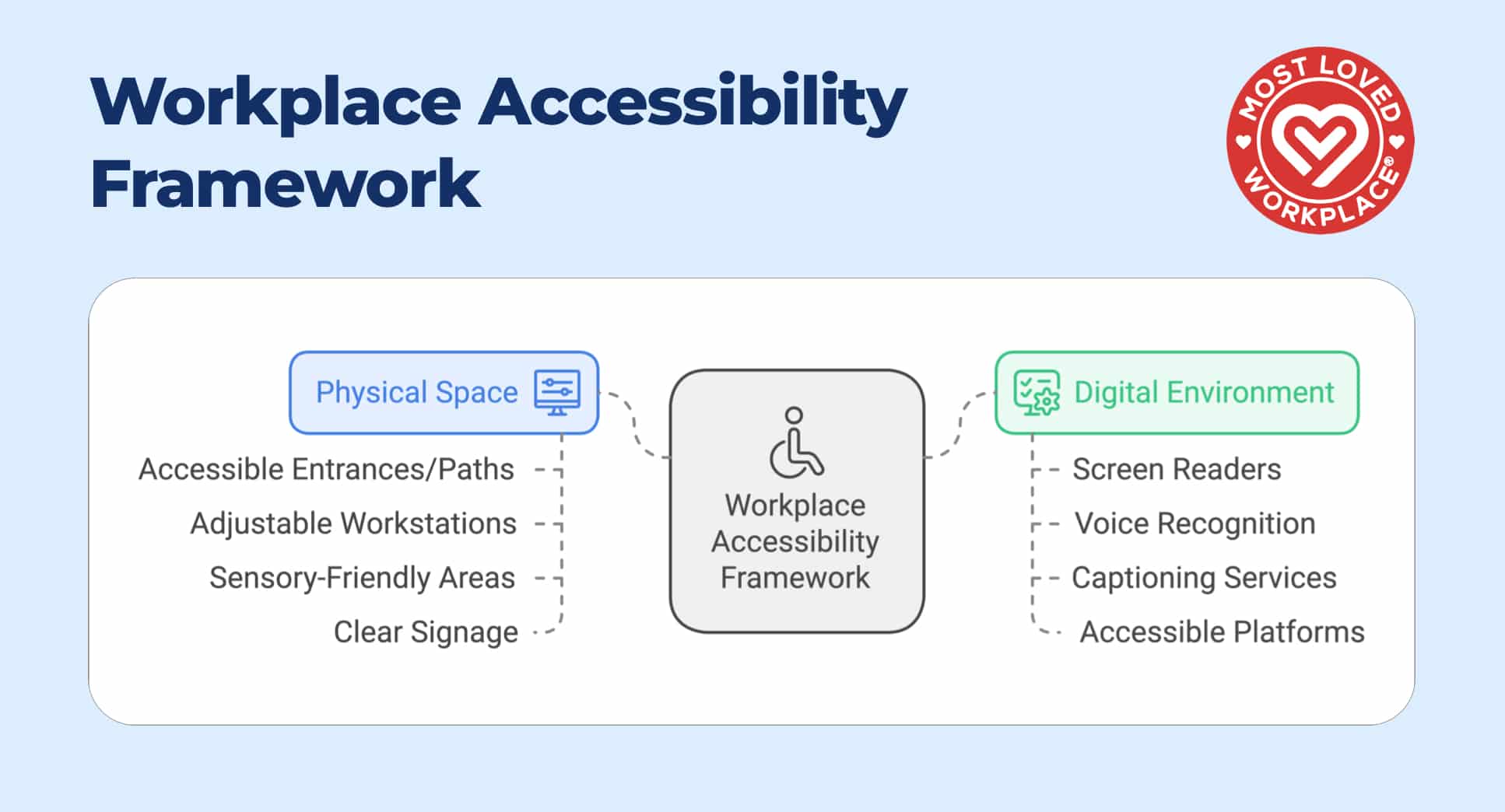
An accessible workplace isn’t just about ramps and elevators – it’s about creating an environment where every employee can perform at their best. Let’s explore how to build a truly accessible workplace that demonstrates love through thoughtful design and accommodation.
Physical Accessibility
Start with these essential elements:
- • Entry and Navigation:
- • Wheelchair-accessible entrances and paths
- • Clear signage with braille
- • Adequate lighting
- • Unobstructed walkways
- • Workspaces:
- • Adjustable desks and chairs
- • Proper lighting controls
- • Quiet spaces for focus work
- • Sensory-friendly areas
Digital Accessibility
In our increasingly digital workplace, accessibility must extend to technology:
Implementing comprehensive accessibility measures can reduce attrition by 2.5% for every 5-point increase in inclusion scores (Source).
- Software and Tools:
- • Screen readers and magnification software
- • Voice recognition programs
- • Keyboard alternatives
- • Captioning services
- Communication Platforms:
- • Accessible virtual meeting platforms
- • Multiple communication channels
- • Document accessibility standards
- • Alternative format availability
Flexible Work Arrangements
As we discuss in our guide to flexibility and flexible work environments, adaptable work arrangements are crucial for inclusion. Consider:
- • Time Flexibility:
- • Flexible start and end times
- • Break schedule modifications
- • Extended lunch periods when needed
- • Remote work options
- • Location Flexibility:
- • Hybrid work models
- • Home office setup support
- • Alternative workspace options
- • Transportation assistance
Reasonable Accommodations Process
Create a clear, dignified process for requesting and implementing accommodations:
- Establish a simple, confidential request procedure
- Provide multiple ways to submit requests
- Ensure quick response times
- Include employee input in solutions
- Regular follow-up to ensure effectiveness
Remember, accessibility isn’t a one-time project – it’s an ongoing commitment to creating an environment where everyone can thrive. When we approach accessibility with love and intention, we create spaces that work better for everyone, not just those with disabilities.
Fostering Trust and Open Communication
Trust isn’t just a nice-to-have – it’s the foundation of a truly inclusive workplace. At Most Loved Workplace®, we’ve found that creating psychological safety is essential for employees with disabilities to bring their whole selves to work.
Creating a psychologically safe environment where employees feel comfortable disclosing their disabilities is vital. This environment helps in reducing stigma and fostering a sense of belonging.
Building Psychological Safety
Consider this sobering reality: only about half of non-inclusive incidents are formally reported, often because employees fear retaliation or doubt their concerns will be taken seriously. Here’s how to create an environment where people feel safe to speak up:
- • Leadership Modeling:
- • Share personal vulnerability
- • Acknowledge mistakes openly
- • Demonstrate active listening
- • Respond to feedback constructively
- • Team Dynamics:
- • Establish clear communication norms
- • Celebrate diverse perspectives
- • Address microaggressions promptly
- • Create inclusive meeting practices
Communication Channels
As we explore in our guide to genuine conversations, effective communication requires multiple channels:
- Formal Channels:
- • Regular check-ins with managers
- • Anonymous feedback systems
- • ERG meetings and forums
- • Town halls with leadership
- Informal Channels:
- • Peer support networks
- • Mentorship programs
- • Social channels for sharing experiences
- • Open-door policies with leadership
Creating Safe Disclosure Environments
Here’s how to make disability disclosure feel safe and supported:
- • Clear Processes:
- • Simple, confidential disclosure procedures
- • Multiple disclosure options
- • Clear information about support available
- • Protection against discrimination
- • Supportive Response:
- • Trained response teams
- • Quick follow-up actions
- • Regular check-ins post-disclosure
- • Accommodation implementation support
Feedback and Continuous Improvement
Love in the workplace means constantly striving to do better. Implement these feedback mechanisms:
- Regular pulse surveys focused on inclusion
- Exit interviews with specific disability inclusion questions
- ERG feedback sessions
- Accessibility audits
- Regular policy reviews with employee input
Remember, trust is earned through consistent actions, not just words. When employees see that their voices are heard and their needs are met with understanding and action, they’re more likely to engage fully in the workplace community.
Demonstrate concrete proof that you’re the real deal – the one that star applicants would love to work for!
Measuring Success and Accountability
As the saying goes, what gets measured gets managed. At Most Loved Workplace®, we’ve found that data-driven accountability is crucial for creating lasting cultural change. Let’s explore how to measure and track your disability inclusion efforts effectively.
Key Metrics for Success
|
Metric Category
|
What to Measure
|
Why It Matters
|
|---|---|---|
|
Representation
|
Disability disclosure rates, leadership representation
|
Indicates trust and inclusion at all levels
|
|
Engagement
|
Participation in ERGs, program attendance
|
Shows active involvement and community building
|
|
Retention
|
Turnover rates, promotion rates
|
Reflects long-term success of inclusion efforts
|
|
Accommodation
|
Request response times, implementation rates
|
Demonstrates practical support effectiveness
|
Learn more about measuring workplace success in our guide to workplace analytics and important stats.
Data Collection Best Practices
- • Use anonymous surveys for honest feedback
- • Implement regular pulse checks
- • Conduct focus groups with ERGs
- • Track accommodation requests and outcomes
- • Monitor promotion and development rates
Final Thoughts: Creating Lasting Change
Creating a culture of belonging for employees with disabilities isn’t just about implementing programs – it’s about fundamentally transforming how we think about and value diverse abilities in the workplace. Let’s recap the key elements of success:
Remember: Organizations that prioritize inclusion see significant benefits, including:
- • 56% increase in job performance
- • 50% decrease in turnover risk
- • 75% reduction in sick days
- • Enhanced innovation and creativity
- • Stronger employer brand
Your Next Steps
- Assess your current inclusion practices
- Develop a comprehensive strategy based on this guide
- Engage leadership in visible commitment
- Implement robust policies and practices
- Create accessible physical and digital environments
- Foster trust through open communication
- Measure and track progress regularly
At Most Loved Workplace®, we believe that love in the workplace starts with creating environments where everyone can thrive. When we embrace disability inclusion with intention and commitment, we create workplaces that aren’t just more equitable – they’re more successful, innovative, and resilient.
Ready to transform your workplace culture? Start by implementing these strategies and measuring their impact. Remember, creating a culture of belonging is a journey, not a destination – and it’s one that’s worth taking, step by thoughtful step.
Take the next step on your employer brand
Three ways to move from reading to results. Pick what fits your stage.
Run your CertCheck report
See how AI systems currently describe your employer brand to candidates.
Get My Free ReportApply for certification
Measure your organization on the Love of Workplace Index® and join 1,800+ certified companies.
Start ApplicationTalk to a Strategic Advisor
Walk through your Employer Branding & Certification Insights report with a specialist.
Keep reading
Building a Caregiver-Friendly Workplace: Why It Matters More Than Ever
Building a Caregiver-Friendly Workplace: Why It Matters More Than Ever Direct Answer A caregiver-friendly workplace is an organization that designs policies, manager practices, and measurement systems to support employees with ongoing caregiving responsibilities while maintaining productivity and retention. Research shows caregiving affects a majority of full-time employees and directly reduces work hours, focus, and retention […]
How Most Loved Workplaces® Support Working Parents in the Modern Workplace
How Most Loved Workplaces® Support Working Parents in the Modern Workplace Why Family Support Matters in Today’s Workplace Most Loved Workplace®–certified organizations recognize that working parents face persistent challenges in balancing professional and family responsibilities. Research from Deloitte shows that 95% of women say workplace flexibility is critical to managing work and home demands. When […]
Employee Well-Being Strategy: Building a Workplace Where People Thrive
Employee Well-Being Strategy: Building a Workplace Where People Thrive Employee well-being is no longer a “nice to have.” It is becoming a core part of how companies protect performance, retain talent, and earn trust. Workplace stress is already widespread. The American Psychological Association’s 2023 Work in America survey found that 77% of workers reported work-related […]