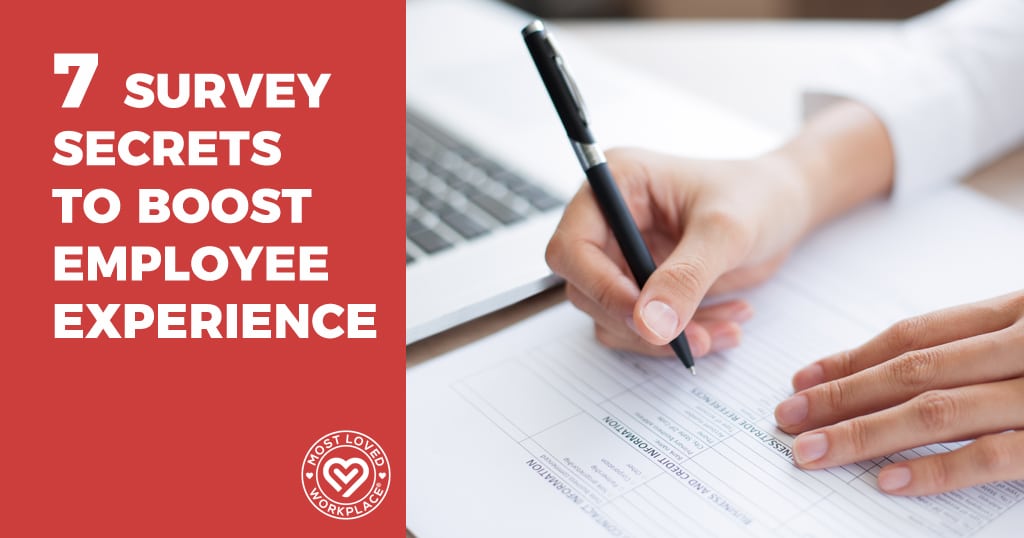
7 Survey Secrets to Boost Employee Experience
7 Ways to Enhance Employee Experience through Surveys Share on facebook Share on twitter Share on linkedin Employee experience has become a focal point for organizations aiming to create a positive workplace environment. Surveys are a powerful means to gather insights, opinions, and employee feedback among the various tools and strategies available. This article explores […]

Leveraging Anonymous Survey Platforms
Employees may hesitate to express genuine opinions, especially if concerns involve sensitive topics. Leveraging anonymous survey platforms provides a safe space for employees to share their views without fear of repercussions. This transparency fosters trust and encourages open communication.
Use anonymous surveys to gather insights into workplace culture, allowing employees to express concerns or suggestions without fear.
Designing Targeted Surveys for Specific Teams
Employee experience varies across teams, departments, and roles within an organization. Designing targeted surveys for specific groups allows for a more granular understanding of the challenges and successes unique to each team. This tailored approach enables organizations to implement precise interventions for improvement.
In recognizing the diverse nature of employee roles, consider creating a specialized survey explicitly designed for the sales team. Sales professionals often navigate unique stressors and motivators inherent to their positions.
A targeted survey for this team can delve into aspects such as client interactions, sales targets, and the effectiveness of support systems. Organizations gain valuable insights that generic surveys might overlook by understanding the specific dynamics within the sales function.
This targeted survey can explore how the sales team perceives their workload, the efficacy of existing communication channels, and the level of support they receive in meeting targets. Moreover, it can delve into motivational factors—what inspires and drives the sales team to excel.
Armed with these nuanced insights, organizations can tailor strategies to enhance the sales team’s experience, directly addressing pain points and reinforcing aspects contributing to job satisfaction. This approach ensures that interventions are not generic but precisely aligned with the unique context of each team, fostering a workplace culture that values and caters to the distinct needs of its diverse workforce.
Combining Employee Feedback with Business Metrics

To truly enhance employee experience, organizations should align employee feedback with crucial business metrics. Organizations can draw correlations between employee satisfaction and business outcomes by integrating survey data with performance indicators. This data-driven approach provides a holistic perspective on the impact of employee experience initiatives.
Analyze survey data alongside productivity metrics to identify patterns that correlate high employee satisfaction with increased team performance.
Promoting Survey Results Transparency and Actionable Insights
Employees are more likely to engage with surveys when they witness tangible outcomes from their feedback. Promote transparency by sharing survey results and actionable insights. Communicate the changes or improvements based on employee feedback, demonstrating a commitment to continuous enhancement.
Create a feedback loop by informing employees about the changes in response to their survey inputs, reinforcing a sense of contribution.
Ensuring Diversity and Inclusivity in Survey Design
Employee experience is diverse and influenced by various factors such as gender, cultural background, and age. Ensure diversity and inclusivity in survey design by crafting questions that resonate with all employees. This approach allows organizations to capture a more comprehensive understanding of the employee landscape.
Include survey questions addressing the unique experiences of underrepresented groups within the organization.
In Summary
Surveys serve as indispensable tools for organizations committed to enhancing employee experience. Crafting purposeful engagement surveys, implementing real-time feedback initiatives, and promoting transparency in survey results are integral steps. By combining employee feedback with business metrics and ensuring diversity in survey design, organizations can foster a workplace environment that values and prioritizes the well-being of its workforce.
As you refine your employee experience, consider leveraging advanced tools to maximize the impact of your survey initiatives. Workplacely’s survey tool, available for free, has been proven to elevate retention, boost performance, and enhance engagement by 2-4 times. Join the ranks of thousands of organizations that have witnessed transformative results.

But the journey toward becoming a Most Loved Workplace® and achieving excellence begins here. Get Certified for Free as a Most Loved Workplace® to gain valuable insights and data for immediate decision-making while reducing rater fatigue. Take the next big step and Apply to Become one of Newsweek’s Top 100 2024 Most Loved Workplaces® in America, the UK, or globally, and seize the opportunity to apply for Newsweek’s Excellence 1000 Companies, setting your organization on the path to recognition and success.
Take the next step on your employer brand
Three ways to move from reading to results. Pick what fits your stage.
Run your CertCheck report
See how AI systems currently describe your employer brand to candidates.
Get My Free ReportApply for certification
Measure your organization on the Love of Workplace Index® and join 1,800+ certified companies.
Start ApplicationTalk to a Strategic Advisor
Walk through your Employer Branding & Certification Insights report with a specialist.
Keep reading

Trust Is A KPI: How To Measure It And Improve It
Trust Is A KPI: How To Measure It And Improve It Trust is not a vibe. It is a measurable business variable that changes how fast work moves, how honest people are, and how long they stay. Most organizations only notice trust when it breaks. By then, the symptoms are already expensive. If you want […]
How to Measure Company Culture: Metrics, Tools, and Tips
How To Measure Company Culture (Metrics & Tools) To measure company culture, you track how people experience work using a mix of numbers and stories: surveys, sentiment, retention, performance, and everyday behaviors. You are not measuring slogans or values on a wall. You are measuring whether people feel respected, connected, and aligned with what the […]

The Expert Guide to Survey Participants: Who They Are, Why They Matter, and How to Choose Them Wisely
The Expert Guide to Survey Participants: Who They Are, Why They Matter, and How to Choose Them Wisely Employee surveys are everywhere. Most companies run at least one engagement or culture survey each year. Many run pulse surveys every quarter. But one thing often gets overlooked in the rush to launch the next survey: Who […]