
From Volunteer to Leader: The Role of Mentorship in Developing Future Leaders
From Volunteer to Leader: The Role of Mentorship in Developing Future Leaders 8 Min. Read In a world where leadership development programs come and go, one method consistently shows remarkable results: mentorship. The data speaks volumes – employees with mentors are promoted five times more often than those without mentors (Source). But what makes mentorship […]
From Volunteer to Leader: The Role of Mentorship in Developing Future Leaders
- 8 Min. Read
In a world where leadership development programs come and go, one method consistently shows remarkable results: mentorship. The data speaks volumes – employees with mentors are promoted five times more often than those without mentors (Source).
But what makes mentorship such a powerful catalyst for leadership development?
I’ve seen firsthand how mentorship transforms promising individuals into exceptional leaders. It’s not just about skill transfer – it’s about creating meaningful connections that foster growth, confidence, and leadership capabilities.
Whether you’re looking to develop future leaders in your organization or seeking to enhance your own leadership journey, understanding the power of mentorship is crucial. Let’s explore how this time-tested approach, combined with modern innovations, creates the perfect environment for leadership development.
Table of Contents:
- The Evolution of Modern Mentorship
- Statistical Evidence: The Impact of Mentorship on Leadership Development
- Key Components of Successful Mentorship Programs
- Technology and Innovation in Modern Mentorship
- Building Sustainable Mentorship Relationships
Ready to discover how professional development through mentorship can transform your organization’s leadership pipeline? Let’s dive into the evidence-based strategies that make mentorship programs truly effective.
The Evolution of Modern Mentorship
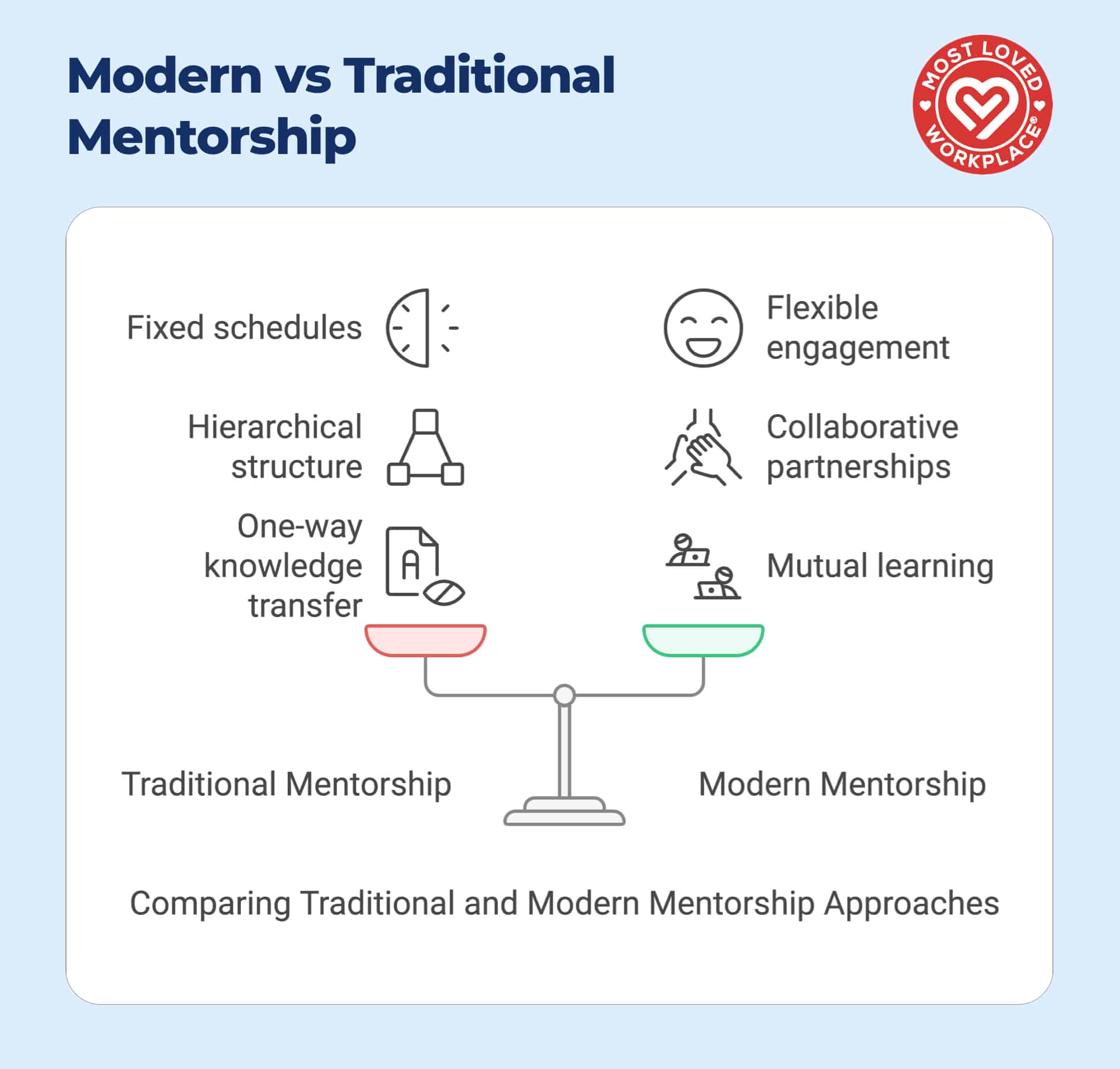
Gone are the days when mentorship was a one-way street of wisdom flowing from senior leaders to junior employees. Modern mentorship has evolved into a dynamic, collaborative relationship that benefits both parties involved.
When structured properly, these relationships show remarkable success – with 91% of mentoring relationships proving effective when both mentors and mentees receive proper training and support (Source).
Modern mentoring involves mutual learning, where both the mentor and mentee gain valuable insights. A mentor with decades of experience can learn about new trends and technologies from their tech-savvy mentee, while the mentee gains guidance and wisdom from the mentor’s experience.
Traditional vs. Modern Mentorship Approaches
|
Traditional Mentorship
|
Modern Mentorship
|
|---|---|
|
One-way knowledge transfer
|
Mutual learning and growth
|
|
Hierarchical relationship
|
Collaborative partnership
|
|
Fixed meeting schedules
|
Flexible engagement models
|
|
Limited scope
|
Cross-departmental exposure
|
|
Focus on technical skills
|
Emphasis on emotional intelligence
|
The Power of Emotional Intelligence in Modern Mentorship
As someone who has studied the impact of emotional connections in the workplace, I’ve observed that the most successful mentorship programs prioritize emotional intelligence alongside technical skills. This approach aligns perfectly with strategic coaching methodologies that foster both professional and personal growth.
Key Features of Modern Mentorship:
- • Cross-Departmental Collaboration: Exposure to different areas of the business
- • Emotional Intelligence Development: Focus on soft skills and leadership qualities
- • Flexible Learning Approaches: Adaptation to different learning styles and needs
- • Technology Integration: Use of digital tools for enhanced connection
- • Measurable Outcomes: Clear goals and success metrics
This evolution in mentorship approaches reflects a deeper understanding of how leaders develop and grow. By embracing these modern principles, organizations can create more effective and sustainable leadership development programs.
Become a Most Loved Workplace
Statistical Evidence: The Impact of Mentorship on Leadership Development
Let’s cut through the theory and look at the hard numbers that demonstrate mentorship’s impact on leadership development. The data tells a compelling story about why organizations should invest in mentorship programs.
Business Performance Metrics
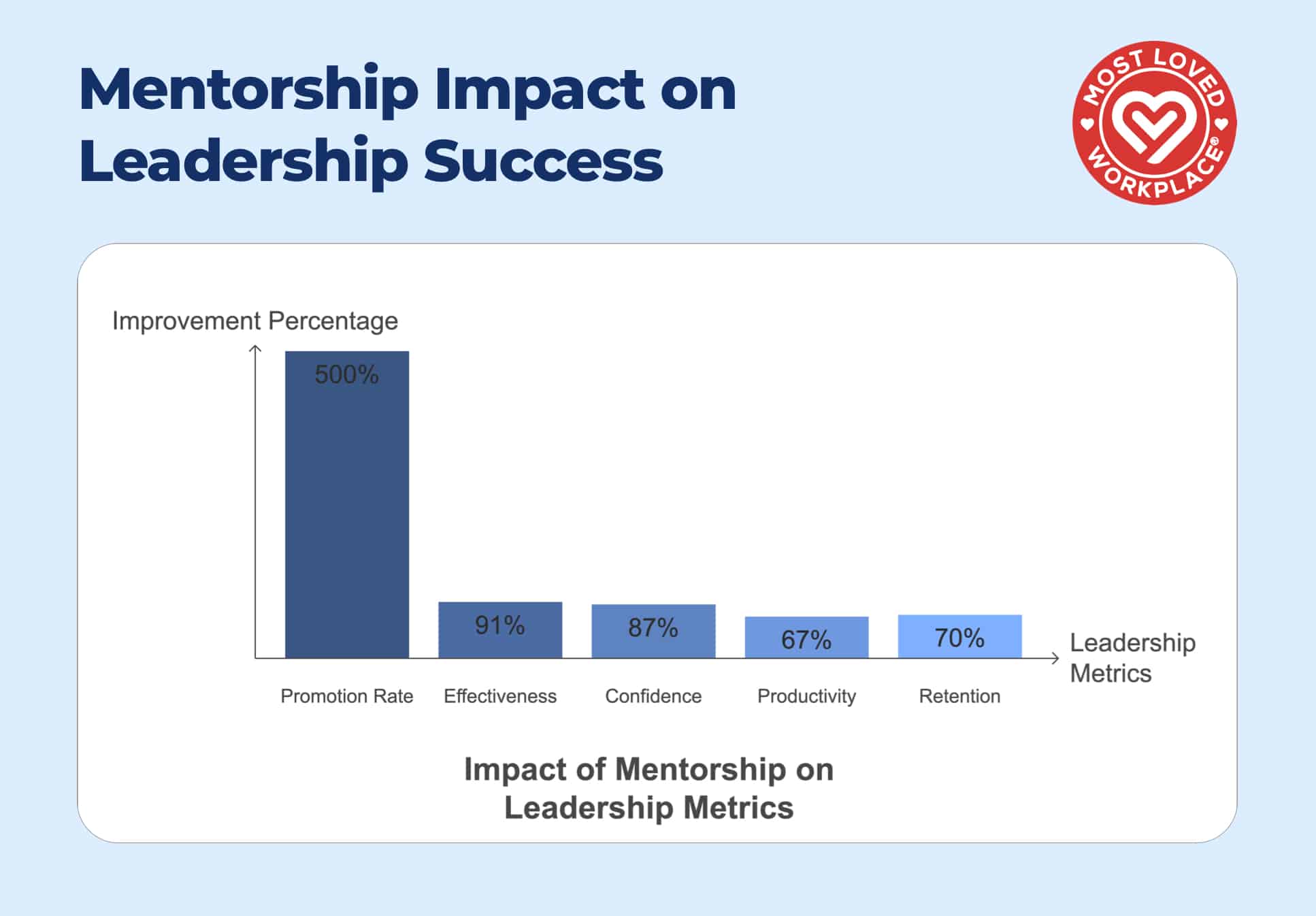
67% of businesses reported increased productivity after implementing mentoring programs (Source). This isn’t just about individual growth – it’s about organizational success.
Key Performance Indicators:
- Productivity Boost: 67% increase in business productivity
- Decision Making: 84% of CEOs say mentors helped them avoid costly mistakes (Source)
- Employee Retention: 70% increase in retention rates through mentorship (Source)
Personal Development Impact
“87% of mentoring program participants report feeling more confident and empowered in their professional roles.” (Source)
These numbers align perfectly with what we’ve observed at Most Loved Workplace® – when organizations invest in their people’s growth through mentorship, they see remarkable returns in both performance and employee engagement.
The Ripple Effect of Mentorship
|
Impact Area
|
Statistical Evidence
|
|---|---|
|
Career Advancement
|
5x higher promotion rates for mentored employees
|
|
Leadership Development
|
70% improvement in work performance
|
|
Business Impact
|
67% increased productivity
|
|
Program Sustainability
|
89% of mentees become mentors
|
Long-term Leadership Pipeline
Perhaps most encouraging is the self-perpetuating nature of successful mentorship programs: 89% of mentees go on to become mentors themselves (Source). This creates a sustainable cycle of leadership development within organizations.
These statistics aren’t just numbers – they represent real organizational transformation and individual growth stories. When implemented with emotional intelligence and strategic planning, mentorship programs become powerful catalysts for developing future leaders.
Key Components of Successful Mentorship Programs
What separates exceptional mentorship programs from mediocre ones? Research shows that when properly structured, 91% of mentoring relationships prove effective (Source). Let’s break down the essential components that create this success.
1. Strategic Goal Setting and Alignment
Effective mentorship begins with clear, measurable objectives. This aligns with our approach at Most Loved Workplace®, where we emphasize performance-driven coaching methodologies.
SMART Goals Framework:
- • Specific: Clear leadership competency targets
- • Measurable: Quantifiable progress indicators
- • Achievable: Realistic development milestones
- • Relevant: Aligned with organizational needs
- • Time-bound: Structured timeline for achievement
2. Personalized Guidance Approach
One size doesn’t fit all in mentorship. The most effective programs embrace a personalized coaching style that considers individual needs and learning preferences.
Effective mentorship programs provide personalized guidance and support, which is crucial for the development of future leaders. Mentors help early-career professionals navigate organizational culture, develop fundamental leadership skills, and address specific challenges.
3. Action Learning Projects
Key Implementation Steps:
- Identify real organizational challenges
- Assign appropriate project scope
- Set clear deliverables and timelines
- Provide regular feedback and support
- Measure and celebrate outcomes
4. Core Leadership Competency Development
|
Competency Area
|
Development Approach
|
|---|---|
|
Strategic Thinking
|
Case studies and scenario planning
|
|
Emotional Intelligence
|
Self-awareness exercises and feedback sessions
|
|
Decision Making
|
Supervised project leadership
|
|
Communication
|
Presentation opportunities and feedback loops
|
|
Change Management
|
Initiative leadership and implementation
|
5. Cross-Departmental Exposure
Broadening perspective through cross-functional experience is crucial for developing well-rounded leaders. Here’s how to implement it effectively:
- • Rotate mentees through different departments
- • Facilitate cross-functional projects
- • Arrange job shadowing opportunities
- • Create collaborative learning sessions
- • Establish networking opportunities
Implementation Checklist
- • ✓ Establish clear program objectives
- • ✓ Match mentors and mentees strategically
- • ✓ Provide training for both parties
- • ✓ Set up regular check-ins and milestones
- • ✓ Create feedback mechanisms
- • ✓ Measure and track progress
- • ✓ Celebrate successes and learnings
Technology and Innovation in Modern Mentorship
The digital transformation has revolutionized how we approach mentorship and leadership development. As someone who has developed machine learning models for analyzing employee experiences, I’ve witnessed firsthand how technology can enhance rather than replace the human connection essential to effective mentorship.
Digital Transformation in Mentorship
Modern mentorship programs are leveraging machine learning and data analytics to create more effective, personalized development experiences. Here’s how technology is reshaping mentorship:
|
Technology
|
Application in Mentorship
|
Benefits
|
|---|---|---|
|
AI-Powered Platforms
|
Personalized learning paths and mentor matching
|
Enhanced compatibility and learning outcomes
|
|
Virtual Reality
|
Leadership simulations and scenario training
|
Safe environment for skill practice
|
|
Digital Collaboration Tools
|
Remote mentoring sessions and resource sharing
|
Increased accessibility and engagement
|
|
Analytics Platforms
|
Progress tracking and program optimization
|
Data-driven program improvements
|
Best Practices for Technology Integration
- Balance Digital and Human Interaction
- • Maintain regular video calls
- • Use technology to enhance, not replace, personal connection
- • Create opportunities for informal digital networking
- Leverage Data Analytics
- • Track mentorship program metrics
- • Analyze engagement patterns
- • Measure learning outcomes
- Ensure Accessibility
- • Choose user-friendly platforms
- • Provide technical training
- • Offer multiple communication channels
Virtual Reality in Leadership Development
Virtual reality leadership simulations, AI-powered personalized learning platforms, and digital collaboration tools can enhance the mentoring experience.
These technological approaches provide immersive learning environments, adapt to individual learning styles, and facilitate remote teamwork.
Implementation Guidelines
Essential Considerations for Technology Integration:
- • ✓ Assess current technological capabilities
- • ✓ Choose platforms that align with organizational culture
- • ✓ Ensure proper security and privacy measures
- • ✓ Provide comprehensive training and support
- • ✓ Establish clear communication protocols
- • ✓ Monitor and adjust based on user feedback
Remember, technology should serve as an enabler of human connection, not a barrier. The most successful digital mentorship programs maintain the emotional intelligence and personal touch that make traditional mentorship effective while leveraging technology to enhance accessibility and effectiveness.
Demonstrate concrete proof that you’re the real deal – the one that star applicants would love to work for!
Building Sustainable Mentorship Relationships
The true power of mentorship lies in building lasting relationships that continue to provide value long after formal programs end. The impact is clear: 89% of mentees eventually become mentors themselves (Source), creating a self-sustaining cycle of leadership development.
Creating Emotional Connections
At Most Loved Workplace®, we’ve found that emotional connections drive engagement and retention. This principle is especially crucial in mentorship relationships.
Sustainable mentoring relationships are essential for long-term development. These relationships extend beyond the initial mentoring period, providing ongoing support through career transitions and personal growth.
Key Elements of Sustainable Mentorship
|
Element
|
Implementation Strategy
|
Expected Outcome
|
|---|---|---|
|
Trust Building
|
Regular open dialogue, consistent support
|
Strong foundation for growth
|
|
Emotional Intelligence
|
Active listening, empathy development
|
Deeper understanding and connection
|
|
Mutual Growth
|
Two-way learning opportunities
|
Enhanced engagement and commitment
|
|
Long-term Vision
|
Career path planning, goal alignment
|
Sustained professional development
|
Creating a Culture of Continuous Learning
Essential Components:
- • Regular Check-ins: Scheduled touchpoints for guidance and feedback
- • Growth Milestones: Celebrating achievements and progress
- • Knowledge Sharing: Creating platforms for exchanging insights
- • Skill Development: Ongoing learning opportunities
- • Network Building: Connecting with broader professional communities
Measuring Relationship Success
Success in mentorship relationships goes beyond traditional metrics. Here’s what to monitor:
- Quantitative Indicators
- • Career advancement rates
- • Skill development progress
- • Project completion success
- • Leadership opportunity participation
- Qualitative Indicators
- • Relationship satisfaction
- • Confidence levels
- • Professional network growth
- • Knowledge application
Best Practices for Long-term Success
- • ✓ Establish clear expectations early
- • ✓ Create structured yet flexible meeting schedules
- • ✓ Document progress and learnings
- • ✓ Encourage reciprocal feedback
- • ✓ Adapt to changing needs and circumstances
- • ✓ Foster independence while maintaining support
Remember, sustainable mentorship relationships create equal opportunities for advancement – research shows that employees with formal mentors are 58% more likely to have equal opportunities for advancement to senior management (Source).
Conclusion: The Future of Leadership Through Mentorship
The evidence is clear: mentorship is not just another leadership development tool – it’s a transformative force that shapes the future of organizations. With mentored employees being promoted five times more often and 87% reporting increased confidence, the impact of effective mentorship programs is undeniable.
Key Takeaways:
- Modern mentorship is a two-way street of mutual learning and growth
- Technology enhances, rather than replaces, human connection in mentorship
- Sustainable relationships form the foundation of successful programs
- Emotional intelligence and data-driven approaches create optimal results
“The most successful organizations don’t just implement mentorship programs – they create cultures where leadership development through emotional connection becomes part of their DNA.
Ready to Transform Your Leadership Development Approach?
Consider these next steps:
- Assess your current leadership development needs
- Identify potential mentors within your organization
- Design a program that balances structure with flexibility
- Implement technology solutions that enhance human connection
- Measure and celebrate success along the way
At Most Loved Workplace®, we believe that love and emotional connection in the workplace create extraordinary results. Learn more about creating a workplace culture that nurtures future leaders through meaningful mentorship relationships.
Remember, the future of leadership development isn’t just about skills and knowledge – it’s about creating genuine connections that inspire growth, foster confidence, and build the leaders of tomorrow.

Take the next step on your employer brand
Three ways to move from reading to results. Pick what fits your stage.
Run your CertCheck report
See how AI systems currently describe your employer brand to candidates.
Get My Free ReportApply for certification
Measure your organization on the Love of Workplace Index® and join 1,800+ certified companies.
Start ApplicationTalk to a Strategic Advisor
Walk through your Employer Branding & Certification Insights report with a specialist.
Keep reading

Trust Is A KPI: How To Measure It And Improve It
Trust Is A KPI: How To Measure It And Improve It Trust is not a vibe. It is a measurable business variable that changes how fast work moves, how honest people are, and how long they stay. Most organizations only notice trust when it breaks. By then, the symptoms are already expensive. If you want […]
How to Measure Company Culture: Metrics, Tools, and Tips
How To Measure Company Culture (Metrics & Tools) To measure company culture, you track how people experience work using a mix of numbers and stories: surveys, sentiment, retention, performance, and everyday behaviors. You are not measuring slogans or values on a wall. You are measuring whether people feel respected, connected, and aligned with what the […]

The Expert Guide to Survey Participants: Who They Are, Why They Matter, and How to Choose Them Wisely
The Expert Guide to Survey Participants: Who They Are, Why They Matter, and How to Choose Them Wisely Employee surveys are everywhere. Most companies run at least one engagement or culture survey each year. Many run pulse surveys every quarter. But one thing often gets overlooked in the rush to launch the next survey: Who […]