Leadership and Employee Engagement: Key Tactics for Motivating Veteran Employees
Leadership and Employee Engagement: Key Tactics for Motivating Veteran Employees 7 min. read. Keeping veteran employees engaged is crucial for business success. Here’s why: • Replacing an employee costs about $4,700, not counting hidden expenses • Total cost can be 3-4 times their salary • Almost half of hiring managers struggle to fill job openings […]
Leadership and Employee Engagement: Key Tactics for Motivating Veteran Employees
7 min. read.
Keeping veteran employees engaged is crucial for business success. Here’s why:
- • Replacing an employee costs about $4,700, not counting hidden expenses
- • Total cost can be 3-4 times their salary
- • Almost half of hiring managers struggle to fill job openings
To keep veteran employees motivated:
- Offer growth and learning opportunities
- Provide meaningful recognition
- Give more autonomy
- Improve two-way communication
- Keep work interesting
|
Strategy
|
Example
|
|---|---|
|
Training programs
|
Amazon's Technical Academy
|
|
Recognition systems
|
|
|
Flexible schedules
|
|
|
Idea sharing
|
Boeing's "Idea Lab"
|
|
Mentorship
|
BAE Systems' "Warrior Integration" program
|
By implementing these strategies, you’ll create a workplace where veterans thrive, boosting engagement and productivity.
Who Are Veteran Employees?
Veteran employees are the pillars of your organization. They’re not just long-timers. They’re the culture keepers, problem-solving wizards, and walking encyclopedias of your company’s history.
What Makes Someone a Veteran Employee
We’re talking about people who’ve stuck around for 10+ years. But it’s more than just time. These folks have:
- • Mastered company workflows
- • Built deep technical know-how
- • Soaked up tons of institutional knowledge
Matt Raskin from Lattice‘s People Strategy Group nails it:
“When it comes to institutional knowledge, there’s no book you can read to help you there. You can only learn it over time.”
Main Engagement Issues
There can be tons of hurdles as a leader in knowing how to truly engage your employees, but when you’re stuck for ideas, see if any of these sound familiar and this might help you identify why you’re struggling to keep engagement and motivation levels high among your veteran employees!
- The Engagement Nosedive
Employee Net Promoter Score (eNPS) tends to drop steadily after year one until about year 11. Yikes.
- The Hamster Wheel Trap
Long-timers can get stuck in a rut, leading to burnout and checking out mentally.
- Feeling Like Old News
After years of service, some might feel taken for granted.
- Career Plateau
Without clear growth paths, veteran employees can hit a wall.
Effects on Company Success
Engaged veteran employees are pure gold. Why?
- • They’re the steady rock in your workforce
- • They’re perfect mentors for newbies
- • They know how to get things done efficiently
But get this: Harvard found that employees who feel they belong are 3.5 times more likely to bring their A-game.
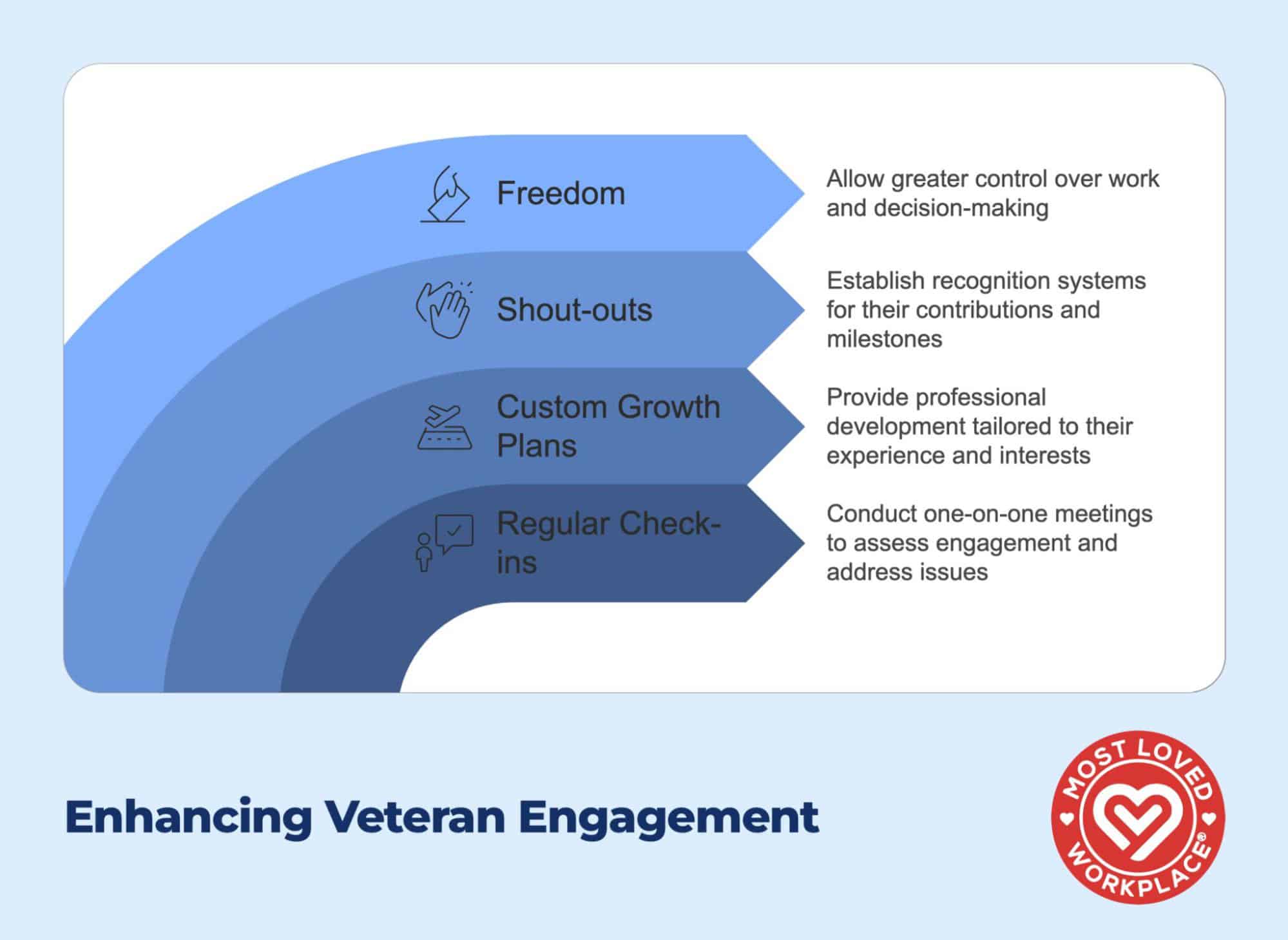
Want to keep your veterans in top form? Try these:
- Regular Check-ins
Don’t assume they’re fine just because they’ve been around forever. Have one-on-ones to gauge their engagement and tackle any issues.
- Custom Growth Plans
Offer pro development that matches their experience and interests.
- Shout-outs
Set up ways to recognize their ongoing contributions and milestones.
- Freedom
Give them more control over their work and decisions.
Keep your veteran employees engaged, and watch your company thrive.
Growth and Learning Options
Veteran employees want to grow and learn. Here’s how to keep them engaged:
Training Programs
Veteran employees need ongoing learning. Try these:
- • Custom skill development: Build programs for long-term staff needs. Amazon’s Technical Academy helps non-tech employees become software engineers.
- • Cross-functional training: Use job rotation to broaden skills. It keeps work fresh and exciting.
- • Leadership development: Offer management training for higher positions. AT&T University does this with leadership courses.
Teaching and Leading Others
Turn your veterans into mentors:
- • Reverse mentoring: Heineken pairs junior employees with senior leaders. Both sides learn something new.
- • Onboarding buddies: Match new hires with veterans. Newbies settle in faster, and veterans feel valued.
- • Internal workshops: Let veterans lead training on their expertise. It shows how important they are.
Leading Different Types of Projects
Give your veterans new challenges:
- • Cross-department work: Let them lead projects outside their usual area. They’ll understand the business better and stay engaged.
- • Innovation teams: Create special groups led by veterans to solve big problems or find new opportunities.
- • Community projects: Put veterans in charge of giving back. It adds meaning to their work and shows off their leadership skills.
Recognition That Matters
Recognizing veteran employees isn’t just nice – it’s smart business. Here’s how to make your long-timers feel truly valued.
Setting Up Recognition Systems
Regular appreciation keeps veteran employees engaged. Here’s the lowdown:
Peer-to-peer recognition: Get coworkers celebrating each other’s wins. It builds appreciation from the ground up.
Leadership shout-outs: Have the big bosses personally acknowledge great work. It shows top-level appreciation for veteran contributions.
Recognition platforms: Tools like Bonusly make appreciation easy and visible. InVision used this approach to automate work anniversary celebrations and boost engagement.
Marking Work Anniversaries
Work milestones deserve special attention. Make them count:
|
Years
|
Ideas
|
|---|---|
|
1
|
"Rookie of the Year" award, team lunch
|
|
5
|
Personalized gift, extra day off
|
|
10
|
Higher rate for vets than non-vets
|
|
20+
|
How much the company actually cares
|
It’s not just about the years – it’s about recognizing their journey and impact.
Most Loved Workplace® Benefits
Becoming a Most Loved Workplace® certified company can supercharge your recognition efforts:
- • It gives you a framework to measure and improve employee satisfaction.
- • The certification process shows employees you care about their happiness.
- • Being certified can boost your employer brand, making veterans proud to stick around.
Valuing Experience
Show veteran employees their wisdom matters:
Pair them with newer employees in mentorship programs. It’s a win-win – veterans feel valued, and newbies learn the ropes.
Invite long-timers to weigh in on big decisions. Their perspective is gold.
Let them lead legacy projects that will shape the company’s future. It’s a powerful way to honor their contributions.
Recognition isn’t one-size-fits-all. Dana Ullom-Vucelich, Chief Human Resources & Ethics Officer at Ohio Living, says:
“By having effective recognition solutions in place, we are able to encourage people to align with our mission while demonstrating their own unique work ethic and passion.”
Tailor your approach to each veteran employee. Some love public praise, others prefer a quiet thank-you. The key? Make it personal and meaningful.
Giving More Control
Veteran employees want autonomy. It’s not just a nice-to-have – it’s a must-have for boosting engagement and productivity. Here’s how to give your long-time staff more control over their work.
Ways to Give More Freedom
Trust your veteran employees to make decisions. Try these strategies:
- • Hand over important tasks that push their skills
- • Set clear limits on their autonomy
- • Let them solve problems their way before jumping in
Pat Bosworth, Founder and CEO, says:
“Empowering employees is important for growing a sustainable business.”
Running Their Own Projects
Want to reignite your veteran employees’ passion? Let them lead projects. Here’s how:
- Cross-department initiatives
Let them lead projects outside their usual area. It gives them a fresh perspective.
- Innovation teams
Form special groups led by veterans to tackle big challenges. It taps into their knowledge while pushing them to think creatively.
- Community outreach
Put them in charge of social responsibility projects. It adds meaning to their work and shows off their leadership skills in a new way.
Work Schedule Options
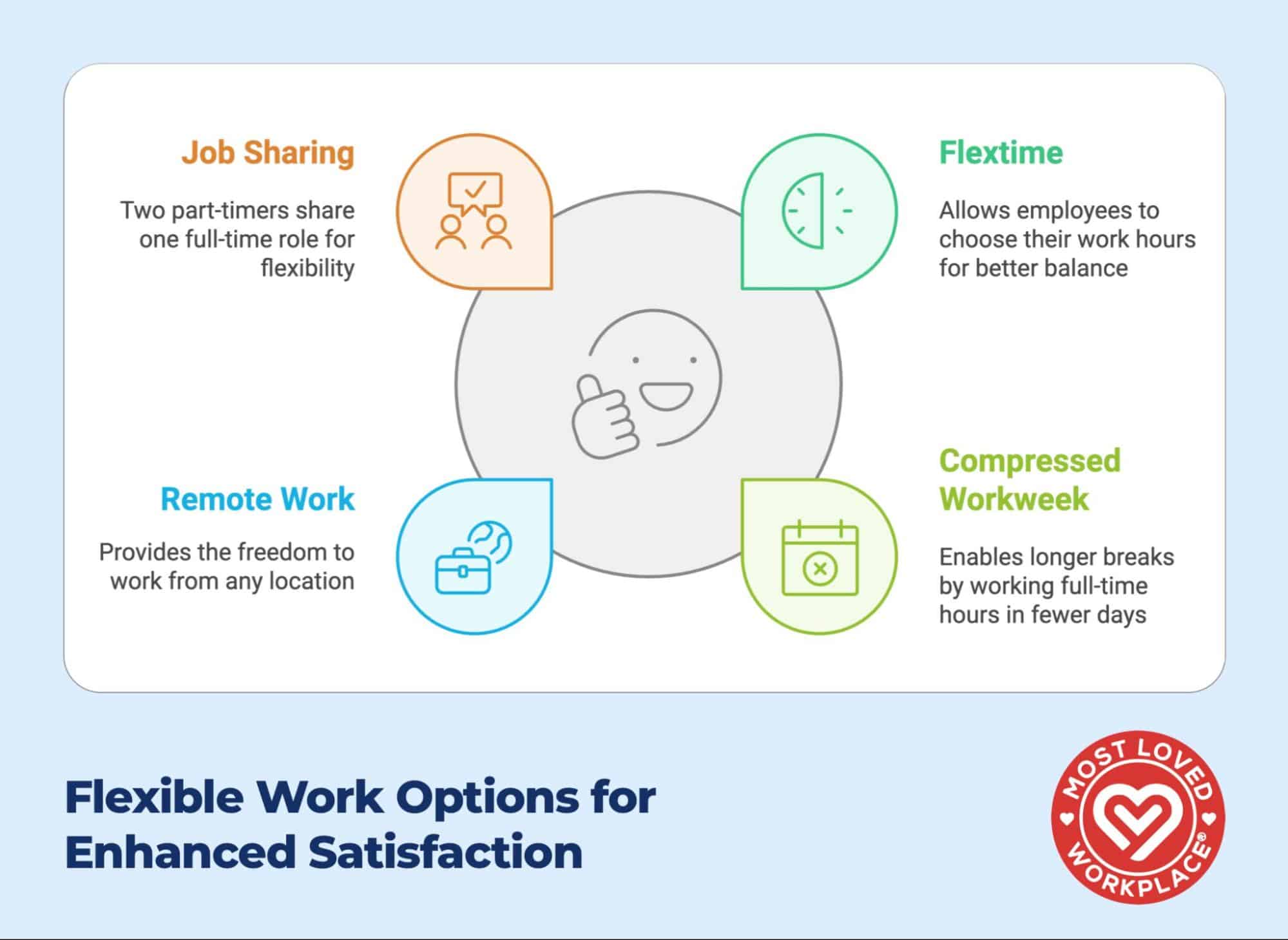
Flexibility in when and where work happens can be a game-changer. Here are some options:
|
Option
|
What it means
|
Why it's good
|
|---|---|---|
|
Flextime
|
Choose start and end times
|
Better work-life balance
|
|
Compressed workweek
|
Full-time hours in fewer days
|
Longer breaks
|
|
Remote work
|
Work from anywhere
|
More job satisfaction
|
|
Job sharing
|
Two part-timers share one full-time role
|
Work-life balance for those who need it
|
Flexibility makes a big difference. A University of Birmingham study found that 90% of managers have “some” or “a lot” of autonomy, but only about half of lower-level employees do. Closing this gap can lead to big improvements.
Take Buffer, for example. They tried a 32-hour workweek (with full-time pay) when the pandemic started. After two years, 91% of their team said they were happier and more productive.
But remember, these changes need a shift in company culture. Maya Ketter, VP of Client Success at OfficeSpace, puts it well:
“Flexibility is a shared responsibility. It’s not just about what I want as an employee, or what is beneficial for me, but it’s what is beneficial for the company as well.”
Better Two-way Talk
Good communication is key for a happy workplace, especially with veteran employees. Here’s how to get leaders and long-time staff talking.
Regular Check-ins
One-on-one meetings keep the conversation flowing. Here’s how to make them work:
|
When
|
What
|
Why
|
|---|---|---|
|
Weekly
|
Today's tasks, quick fixes
|
Solve problems fast
|
|
Monthly
|
Big goals, career stuff
|
Plan for the future
|
|
Quarterly
|
How you're doing, big ideas
|
Stay on track, feel appreciated
|
Pro tip: Create the agenda together. It makes everyone feel involved.
Getting Their Ideas
Veteran employees know their stuff. Use it!
- Idea boxes, but digital
Set up online tools where people can share and vote on ideas. It’s like democracy for innovation.
- Mix it up
Put veterans on teams tackling big company problems. Their experience can be a game-changer.
- Company-wide chats
Host big meetings where veterans can speak up and ask the bosses questions.
Boeing’s doing this with their “Idea Lab.” Since 2013, it’s sparked over 1,000 new ideas from employees.
Sharing What They Know
Help veteran employees pass on their wisdom. It’s good for everyone.
Try these:
- • Buddy up: Match veterans with newbies. It’s like having a work big brother or sister.
- • Write it down: Get veterans to jot down how things work. It’s like creating a playbook for the company.
- • Lunch and learn: Have casual talks where veterans share what they know. It’s learning, but with sandwiches.
BAE Systems has a cool program called “Warrior Integration.” Part of it pairs up experienced staff with new hires, especially wounded warriors starting civilian jobs.
Keeping Work Interesting
Veteran employees need fresh challenges. Here’s how to keep their work exciting and meaningful.
Changing Job Duties
Updating responsibilities keeps veteran employees engaged. Here’s how:
|
Strategy
|
Benefits
|
Example
|
|---|---|---|
|
Job rotation
|
Prevents boredom, builds skills
|
Manufacturing company rotates employees through departments every 6 months
|
|
Task expansion
|
Adds variety, boosts responsibility
|
Adding project management to a senior engineer's role
|
|
Cross-functional projects
|
Broadens perspective, sparks innovation
|
Veteran sales rep leads product development initiative
|
These changes can make a big difference. Take Boeing’s “Idea Lab” in 2013. It sparked over 1,000 new ideas from employees, many from veterans with fresh perspectives on different roles.
Matching Goals
Aligning company goals with veteran employees’ aspirations is key. Here’s how:
- Have regular career chats
- Create personalized development plans
- Offer challenging projects that match personal interests
As Pat Bosworth, Founder and CEO, puts it:
“Empowering employees is important for growing a sustainable business.”
This approach motivates veterans and drives company success.
New Ideas and Projects
Letting veteran employees lead new initiatives can reignite their passion:
- • Form innovation teams led by veterans to tackle big challenges
- • Pair veterans with new hires in mentorship programs
- • Put veterans in charge of community outreach projects
BAE Systems’ “Warrior Integration” program is a great example. It pairs experienced staff with new hires, especially wounded warriors starting civilian jobs. This helps new employees and gives veterans a sense of purpose and leadership.
Wrapping Up
Keeping veteran employees motivated and engaged is key for success. Here’s a quick recap of the strategies we’ve covered:
Growth and Learning
Give veterans chances to learn new skills. Amazon’s Technical Academy is a great example. It helps non-tech employees become software engineers.
Meaningful Recognition
Show veterans you value their long-term contributions. InVision uses platforms like Bonusly to celebrate work anniversaries automatically.
Autonomy
Trust veterans to manage their work. Buffer tried a 32-hour workweek with full-time pay. Result? 91% of their team said they were happier and more productive.
Two-way Communication
Keep the conversation going. Boeing’s “Idea Lab” got over 1,000 new ideas from employees since 2013. It shows how valuable veteran knowledge can be.
Work Variety
Keep things interesting. BAE Systems pairs experienced staff with new hires in their “Warrior Integration” program. It gives veterans a new sense of purpose through mentoring.
These aren’t one-size-fits-all solutions. As Sean Passmore from Wells Fargo puts it, you need to tailor your approach to create a “military-thriving culture”.
The bottom line? Show veterans their experience matters. Give them chances to grow and make a real impact.
When you do this right, it pays off. Harvard found that employees who feel they belong are 3.5 times more likely to do their best work. For veterans, belonging often comes from feeling their unique skills are valued and used.
Motivating veteran employees isn’t just about keeping them around. It’s about tapping into their knowledge, sparking innovation, and building a strong workforce. Your goal? Create a place where veterans don’t just stay – they thrive.
Demonstrate concrete proof that you’re the real deal – the one that star applicants would love to work for!
Demonstrate concrete proof that you’re the real deal – the one that star applicants would love to work for!
FAQs
How to support veterans at work?
Supporting veterans in the workplace isn’t just good for them – it’s great for your company too. Here’s how to create an environment where veteran employees can thrive:
Focus on skills, not titles. A veteran’s leadership experience in the military? That could make them an awesome project manager.
Make your company’s mission crystal clear. Veterans are used to working towards a bigger goal. They’ll appreciate knowing how their work fits into the bigger picture.
Build a strong team spirit. Veterans are used to camaraderie. Organize team outings or collaborative projects to recreate that feeling.
Give clear guidelines. Help veterans transition smoothly by providing clear expectations and frameworks for their work.
Set up a buddy system. Pair new veteran hires with experienced veteran employees. It’s like having a friendly guide in this new civilian work world.
Create veteran groups. These can be a great place for veterans to network, support each other, and feel part of a community.
Don’t forget about military spouses. They’re often incredibly adaptable and skilled – perfect additions to your talent pool.
Take care of mental health. Make sure your health insurance includes solid mental health coverage. It’s crucial for supporting veterans’ overall well-being.
Here’s a quick look at how some of these strategies might play out:
|
Strategy
|
Real-world Example
|
|---|---|
|
Skills-based hiring
|
Military leadership experience → Project management role
|
|
Team building
|
Monthly volunteer activities or team challenges
|
|
Veteran buddies
|
New hire John (ex-Navy) paired with Sarah (5 years at company, ex-Army)
|
|
Mental health benefits
|
Coverage for PTSD counseling and other veteran-specific services
|

Building a Thriving Workplace Culture!
Discover how to leverage the right technology and implement a proactive strategy that cultivates talent and facilitates team collaboration.
Take the next step on your employer brand
Three ways to move from reading to results. Pick what fits your stage.
Run your CertCheck report
See how AI systems currently describe your employer brand to candidates.
Get My Free ReportApply for certification
Measure your organization on the Love of Workplace Index® and join 1,800+ certified companies.
Start ApplicationTalk to a Strategic Advisor
Walk through your Employer Branding & Certification Insights report with a specialist.
Keep reading

When a Candidate Asks AI About You, What Do They Find?
When a Candidate Asks AI About You, What Do They Find? Here’s what’s changed in how candidates research employers, and it’s happening faster than most HR teams realize. Two years ago, a candidate researching your company would open a browser and search. They’d look at your careers page, check Glassdoor, maybe find a LinkedIn review […]
What the World’s Most Loved Workplaces Actually Do to Win the War for Talent
What the World’s Most Loved Workplaces Actually Do to Win the War for Talent There are 1.7 job openings for every unemployed worker in the United States right now. ManpowerGroup’s 2026 Talent Shortage Survey found that 75 percent of employers globally report difficulty filling roles, the highest level in over a decade. Most companies respond […]
A Breakdown of Most Loved Workplace® Certification ROI
Blog A Breakdown of Most Loved Workplace® Certification ROI Louis Carter April 29, 2026 What is the return on investment for Most Loved Workplace® certification? Most Loved Workplace® certification delivers measurable return across three categories: recruiting efficiency, employee retention, and employer brand credibility. The investment does not produce abstract goodwill. It produces verifiable proof that […]