Workplace Culture Assessment: Measuring How Veteran-Friendly Your Organization Really Is
Workplace Culture Assessment: Measuring How Veteran-Friendly Your Organization Really Is 9 min. read. Want to know if your company truly supports veterans? Here’s an outline of how to measure it, some key findings and, in short, some ways to improve. Don’t worry, we’ll go into more detail further down in the post: Check hiring and […]
Workplace Culture Assessment: Measuring How Veteran-Friendly Your Organization Really Is
9 min. read.
Want to know if your company truly supports veterans? Here’s an outline of how to measure it, some key findings and, in short, some ways to improve. Don’t worry, we’ll go into more detail further down in the post:
- Check hiring and retention rates for vets
- Evaluate career growth opportunities
- Assess culture shock mitigation efforts
- Review support systems like mentors and vet groups
- Gauge veteran employee job satisfaction
Key findings:
- • 57% of employed vets are satisfied with their work (down from 65% last year)
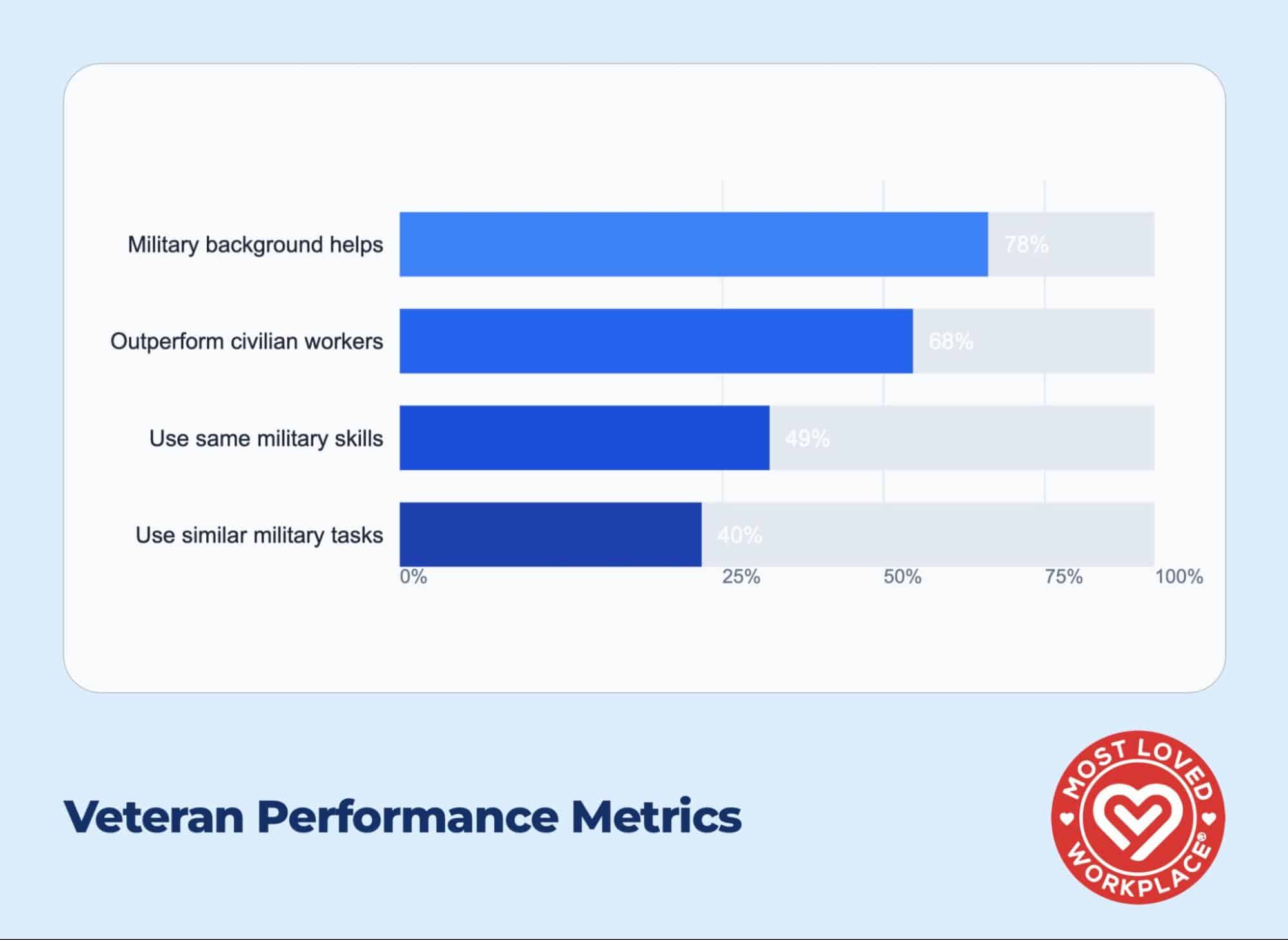
- • 68% of employers think vets outperform civilian workers
- • Almost half of vets quit their first civilian job within a year
To improve:
- • Create veteran-specific onboarding programs
- • Launch a Veteran Employee Resource Group (ERG)
- • Invest in targeted training for vets
- • Educate civilian staff on military culture
- • Foster open communication and celebrate military service
Remember: Being veteran-friendly isn’t just about hiring. It’s about creating an environment where vets can thrive long-term.
Table of Contents
|
Metric
|
Target
|
|---|---|
|
Veteran hires
|
>10% of total hires
|
|
Retention rate
|
>50% after first year
|
|
Turnover
|
Lower for vets vs. non-vets
|
|
Promotions
|
Higher rate for vets than non-vets
|
Strategies for Effective Veteran Hiring Assessment Tools
You can put your company to the test by self-certifying just how loved your workplace is by the veterans at your company. Visit MostLovedWorkplace® and look at our 2024 list of Top Most Loved Workplaces® for Veterans
When researching this post we also wanted to get a broader view of how workplace culture is assessed by others, so we looked at:
- The Veteran Workforce Toolkit
This isn’t just a bunch of PDFs. It’s a roadmap for leaders to create a top-notch environment for vets.
- Military Friendly® Employers Standards
These folks use public data AND a free survey to separate the real deals from the pretenders.
- Employee Surveys
We went straight to the source, asking vets how they REALLY feel about their workplace.
How We Got the Data
We didn’t just Google “veteran-friendly companies.” Here’s where we found the good stuff:
- • We asked vets directly about everything from job satisfaction to how often they think about quitting.
- • We dug into company data: hiring stats, retention rates, promotion numbers. The works.
- • We checked who’s getting gold stars from legit organizations like the U.S. Department of Labor.
Using Military Standards
The Military Friendly® Employers criteria isn’t just a participation trophy. Here’s what they look at:
|
Category
|
What It Measures
|
|---|---|
|
New Hire Retention
|
>50% for vets
|
|
Turnover
|
Lower for vets than non-vets
|
|
Promotions
|
Higher rate for vets than non-vets
|
|
How much the company actually cares
|
|
|
Hiring & Onboarding
|
Making sure vets don't feel lost
|
|
Policies & Compliance
|
Following the rules (always)
|
Companies that violate vet protections? They’re out faster than you can say “dismissed.”
What Others Also Measure
To figure out if a company is truly veteran-friendly, we need to look beyond the marketing hype. Here’s how we separated the real deals from the pretenders:
Hiring and Keeping Veterans
We didn’t just count how many vets got hired. We dug deeper:
- • How many veterans did they hire? What percentage of total hires?
- • Do vets stick around longer than other employees?
Here’s what good looks like:
|
Metric
|
Target
|
|---|---|
|
Veteran hires
|
>10% of total hires
|
|
Retention rate
|
>50% after first year
|
|
Turnover
|
Lower for vets vs. non-vets
|
SHRM says 68% of employers think vets outperform their civilian coworkers. But do the numbers back that up?
Job Growth Options
Getting hired is one thing. Moving up is another:
- Do vets get promoted faster or slower than others?
- How many management roles do veterans hold?
Take Proseal America, for example. Their veteran hires were “nearly lapping other service techs in terms of progress” in just one year. That’s the kind of data we’re after.
Support Program Results
Fancy programs don’t mean much if they don’t work. We looked at:
- • Mentorship programs: Do they exist? How many vets use them?
- • Training initiatives: Specific programs to help vets adjust to civilian work.
- • Employee resource groups (ERGs): How many vets participate? What do they achieve?
Gary Patton from CACI International Inc. shared this:
“We support new hires by inviting them to join CACI’s Veteran Employee Resource Group (ERG), which assists with hiring, retention, philanthropy, mentorship, and professional development.”
That’s the kind of all-around support we’re looking for.
The bottom line? It’s not just about having these programs – it’s about proving they work. Are vets actually succeeding and sticking around because of them?
What the Data Shows
Let’s dive into the numbers. Are companies really backing up their talk about veteran support?
Veteran Job Satisfaction
The stats tell a mixed story:
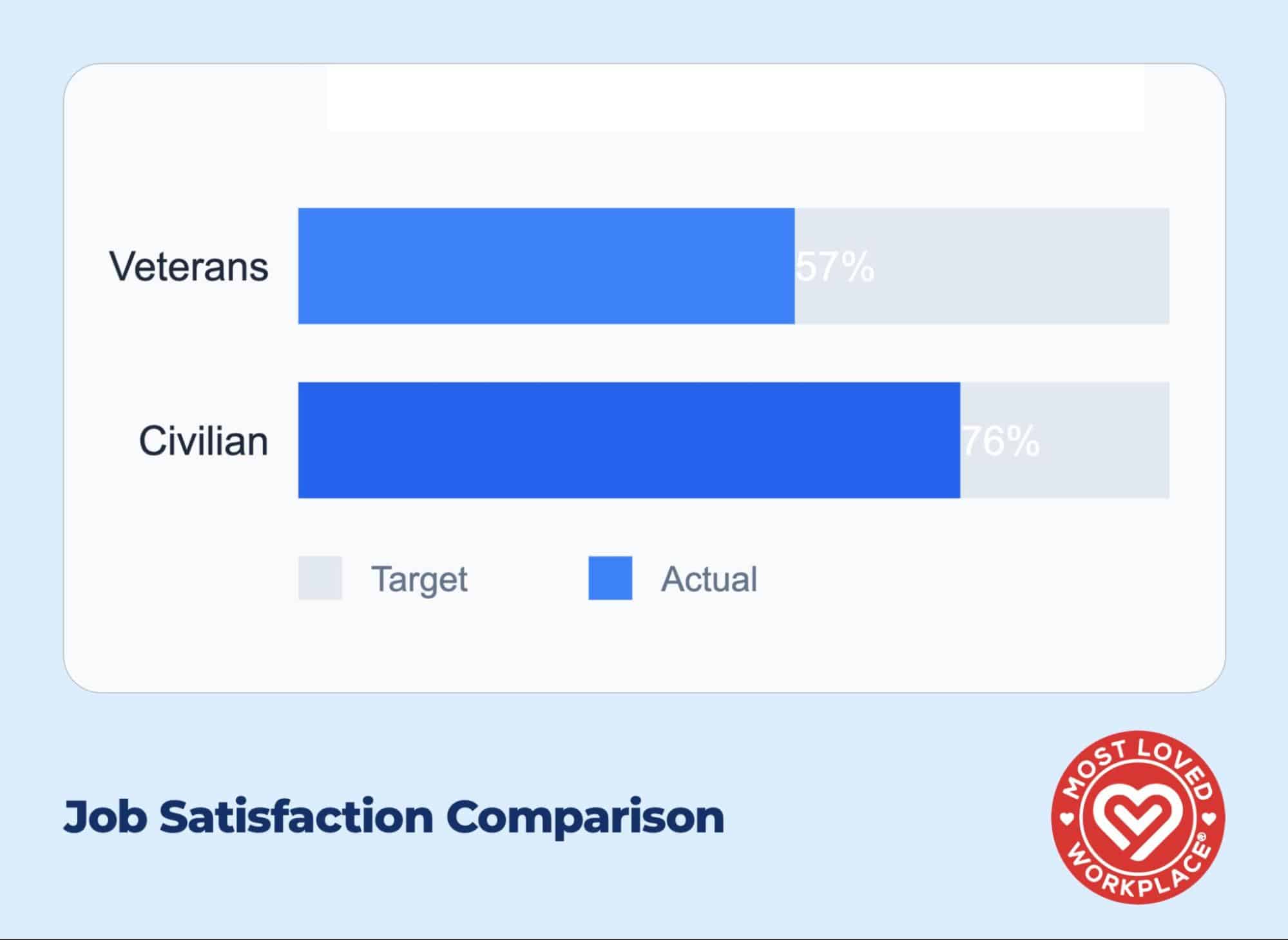
- • 57% of employed vets are happy with their work. That’s down from 65% last year.
- • Civilian workers? They’re at 76% satisfaction. Vets are falling behind.
Why the gap? Two main culprits:
- 22% of vets feel overqualified for their jobs.
- 20% say they’re stuck in low-paying gigs.
But it’s not all bad news. When companies nail it, vets thrive:
|
What Works
|
Satisfaction Rate
|
|---|---|
|
Low stress
|
84%
|
|
Smooth transition
|
81%
|
|
Financial stability
|
3x more likely to be happy
|
On-the-Job Performance
68% of bosses think vets outshine civilian workers. But do the numbers back this up?
- • 78% of vets say their military background helps in their current role.
- • 40% do tasks similar to their military jobs. Of these, 83% are satisfied.
- • 49% use the same skills as in the military. This group has an 82% satisfaction rate.
The takeaway? When vets can use their military skills, they’re happier AND more effective.
Job Retention
Here’s where things get dicey:
- • Almost half of vets quit their first civilian job within a year.
- • Up to 80% are gone before two years.
- • Only about 20% stick around longer than that.
Why the revolving door? Top reasons:
- No room to grow
- Boring work
- Lack of training
- Culture shock
But here’s the twist: After that first job, most vets stay longer than the average worker’s 2.5-year stint.
Rosemary Haefner, CareerBuilder‘s HR chief, sums it up:
“Veteran hiring initiatives seem to be top of mind for the majority of employers, and it is almost always a hot-button topic in an election year.”
The bottom line? Companies are eager to hire vets. But keeping them happy and productive? That’s the real challenge.
How to Check Your Workplace
Think your company is veteran-friendly? Let’s put that claim to the test. Here’s how to measure if your workplace is truly supporting your nation’s heroes or just talking the talk.
Measurement Tools
Don’t guess. Use these tools to get a clear picture:
- Military Friendly® Employers Survey
This survey digs deep into your veteran hiring and retention practices. Here’s what they look at:
|
Metric
|
Benchmark
|
|---|---|
|
New Hire Retention (Veterans)
|
>50%
|
|
Veteran vs. Non-Veteran Retention
|
Higher for vets
|
|
Military Employee Turnover
|
<20% and lower than non-vets
|
Heads up: You need to have hired vets in the last 12 months to even qualify. No recent hires? That’s your first red flag.
- Internal Data Deep Dive
Look at your own numbers:
- • How many vets are you hiring?
- • How well are they performing?
- • How long are they staying?
Vets typically stick around for about two-and-a-half years. If yours are leaving faster, something’s up.
Compare with Others
Knowing your stats is great, but how do you stack up? Here’s how to find out:
- Industry Standards
Check out reports in your industry. Tech might have different norms than manufacturing.
- Best Practice Sharing
Join veteran employment networks. Some companies are open about what they do:
“We support new hires by inviting them to join CACI’s Veteran Employee Resource Group (ERG), which assists with hiring, retention, philanthropy, mentorship, and professional development.”
- Gary Patton, CACI International Inc.
- Third-Party Recognition
Look at companies winning awards for their veteran programs. What are they doing differently?
- Love of Workplace Index®
This tool lets you compare your overall employee satisfaction against other companies.
- Peer Comparison
If you can, share data with other companies in your field. It can be eye-opening.
Remember, it’s not just about numbers. It’s about creating a place where vets can thrive. As Mike Thiel, a U.S. Navy veteran and talent acquisition manager at Micron Technology, says:
“To give these opportunities to veterans who are very scared of transitioning, to be able to provide something for them, is huge.”
Don’t just measure. Do something with what you learn. Your veteran employees – and your company – will be better for it.
Hiring Veterans: Create A Welcoming Workplace
Research on Veterans in the Workplace
Recent studies have uncovered some interesting facts about veteran employment in the civilian workforce. While many companies want to hire vets, they’re not always great at actually doing it.
The Society for Human Resource Management (SHRM) did a big study on this. They found that 90% of HR pros think hiring vets is a good idea. But only 31% said their company was good at actually hiring them. That’s a big gap between wanting to do something and actually doing it.
Here’s something cool: companies with formal vet hiring programs do way better. They’re 1.5 times more likely to hire vets successfully than companies with informal programs. And they’re 3 times better than companies with no program at all.
But hiring vets is just the start. Keeping them around is tough too. A 2014 report showed that 60-80% of vets leave their first civilian job before their second work anniversary. That’s a lot of turnover!
What Happens When Companies Support Vets?
When companies really try to help vets, good things happen. Here’s what we’ve seen:
- Vets stick around longer
Companies that help vets adjust to civilian work see better retention rates. Stanley Black & Decker, for example, focuses on helping vets grow their careers, not just getting them in the door.
- Military skills get put to use
Only 2% of HR pros use tools to translate military skills into civilian job skills. But 71% said they’d be willing to try these tools. That’s a big opportunity to help vets use their skills in new ways.
- Company culture gets better
When vets fit in well, the whole company benefits. Vets bring unique leadership skills and perspectives that can help everyone.
- It’s good for business
The Bureau of Labor Statistics shows that vets are a big part of the workforce. Hiring vets can help companies fill skill gaps and boost their bottom line.
- Some vets need extra help
Recent data from January 2024 shows that some groups of vets struggle more than others. For example, unemployment for vets aged 18-24 jumped from 7.7% to 11.0%. This shows we need to focus on helping younger vets especially.
Let’s look at a real-world example. The U.S. Department of Veterans Affairs (VA) has been studying how to keep its own veteran employees around longer. Researcher Stacie Furst-Holloway found that vets tend to leave VA jobs about four years earlier than non-vets. This discovery is pushing the VA to find new ways to keep vets on board.
Furst-Holloway puts it well:
“We can focus on hiring, but if we don’t tie that to the bigger picture in terms of retention as well, then we’re missing half the picture.”
This shows that helping vets isn’t just about getting them jobs. It’s about helping them build long-term careers too.
Ways to Improve
Want to make your workplace truly veteran-friendly? Let’s look at some practical steps to boost your veteran support.
Better Support Programs
It’s time to go beyond just saying you support vets. Here’s how to create programs that actually work:
- Overhaul Your Onboarding
The first 90 days are key. Create a veteran-specific onboarding program that includes:
- A buddy system pairing new hires with veteran mentors
- A guide to common corporate terms
- Clear explanations of how military skills apply to their new role
Microsoft’s onboarding program covers both technical and soft skills. The result? They keep 80% of their veteran hires after two years.
- Launch a Veteran ERG
Veteran Employee Resource Groups do more than just socialize. They:
- Provide peer support
- Spot workplace issues
- Drive policy changes
At Bristol Myers Squibb, the veteran ERG worked with HR to improve military leave policies based on reservist feedback.
- Invest in Targeted Training
|
Training Type
|
Purpose
|
Example
|
|---|---|---|
|
Leadership Translation
|
Help vets adapt military leadership to corporate settings
|
Explaining "influence" vs "command"
|
|
Corporate Culture 101
|
Bridge the gap between military and corporate norms
|
Teaching networking skills
|
|
Career Pathing
|
Show vets how to advance in the company
|
Comparing military ranks to corporate job levels
|
- Create a “Vet-to-Exec” Pipeline
Don’t just hire vets – help them grow. Johnson & Johnson offers six-month rotations across different functions, giving vets a chance to explore and excel.
Better Team Integration
Getting hired is just the start. Here’s how to help vets feel like part of the team:
- Educate Your Civilian Staff
Host “Military 101” sessions for non-veteran employees. Cover:
- • Military culture and values
- • Common myths about veterans
- • How to use veterans’ unique skills
- Translate the Mission
Veterans thrive on purpose. Show them how their work fits into the bigger picture. As Kristin N. Saboe, Ph.D., an Army veteran and psychologist, says:
“Many veterans join the military to serve something greater than themselves. That need doesn’t go away when they take off the uniform.”
- Foster Open Communication
Create an environment where vets feel comfortable speaking up:
- • Give clear, direct feedback (vets appreciate it)
- • Host regular “town halls” for vets to voice concerns
- • Train HR on veteran-specific issues like PTSD and transition challenges
- Celebrate Military Service
Don’t limit it to Veterans Day. Make military service a point of pride year-round:
- • Highlight veteran achievements in company news
- • Create a “Wall of Honor” for your veteran employees
- • Offer paid time off for Reserve and National Guard duties
Next Steps
You’ve measured your workplace and spotted the gaps. Now what? Let’s turn those insights into action.
Here’s how to become truly veteran-friendly:
Revamp Your Recruiting
Don’t just post jobs. Target vets strategically:
- • Track which career fairs and job boards actually land veteran hires
- • Add a “We’re Veteran-Friendly” statement to job posts
- • Showcase current veteran employees in recruiting materials
Bridge the Skills Gap
Military experience is gold. Help vets translate it:
- Skills mapping
Connect military roles to civilian jobs. For example, a logistics specialist could become a supply chain manager.
- Reskilling program
Fill role-specific gaps. Think tech bootcamps for IT positions.
- Mentorship
Pair new hires with veteran employees. Weekly check-ins for the first 3 months can make a big difference.
Overhaul Your Onboarding
First impressions matter. Make yours count:
- • Create a “Corporate 101” guide (explain those acronyms!)
- • Implement a 90-day integration plan
- • Assign a veteran buddy for each new hire
Build a Veteran Community
Don’t let vets feel isolated. Launch a Veteran Employee Resource Group (ERG), celebrate military milestones, and host regular “town halls” for veteran feedback.
Invest in Growth
Show vets a clear path forward. Create veteran-specific leadership programs, offer rotational assignments to broaden skills, and highlight veteran success stories internally.
Measure and Adjust
What gets measured gets managed. Track veteran retention rates (aim for higher than non-vets), survey veteran job satisfaction regularly, and use the Love of Workplace Index® to benchmark against other companies.
Becoming veteran-friendly isn’t a one-time effort. It’s an ongoing commitment. As Bart Womack, Veteran Strategy Officer at Randstad, puts it:
“Veteran hiring is a mindset and a culture shift. The companies that excel at hiring veterans have mastered this shift from the top down.”
Start small, be consistent, and watch your workplace transform into a true haven for our nation’s heroes.

Building a Thriving Workplace Culture!
Discover how to leverage the right technology and implement a proactive strategy that cultivates talent and facilitates team collaboration.
Take the next step on your employer brand
Three ways to move from reading to results. Pick what fits your stage.
Run your CertCheck report
See how AI systems currently describe your employer brand to candidates.
Get My Free ReportApply for certification
Measure your organization on the Love of Workplace Index® and join 1,800+ certified companies.
Start ApplicationTalk to a Strategic Advisor
Walk through your Employer Branding & Certification Insights report with a specialist.
Keep reading

What AI Finds When It Looks for Your Employer Brand
What AI Finds When It Looks for Your Employer Brand Something has changed in how candidates research employers. It happened gradually and then all at once. A candidate considering whether to apply to your company no longer starts with your careers page. They ask an AI system. They type something like ‘what’s it like to […]
Why Employers Lose the Talent War They Should Win
Why Employers Lose the Talent War They Should Win There’s a pattern in the LOWI data that deserves more attention than it gets in conversations about healthcare workforce strategy. Healthcare organizations, for example, consistently score among the highest on emotional connectedness across any sector in the certified population. The mission is real and operative. Employees […]
The Mission Gap: Why the Organizations With the Strongest Cultures Are the Hardest to Find
The Mission Gap: Why the Organizations With the Strongest Cultures Are the Hardest to Find There’s a pattern in the LOWI data that shows up consistently across sectors and has nothing to do with the quality of the culture itself. Mission-driven organizations, whether in energy services, industrial manufacturing, food service, education, or healthcare, score among […]