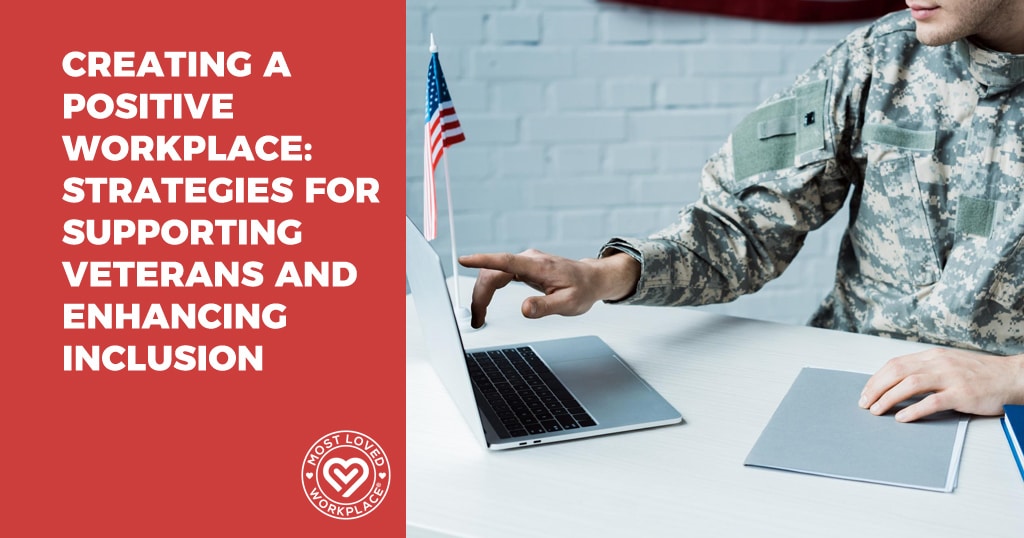
Creating a Positive Workplace: Strategies for Supporting Veterans and Enhancing Inclusion
Creating a Positive Workplace: Strategies for Supporting Veterans and Enhancing Inclusion 7 min. read. Are you looking to offer meaningful support to veterans within your workplace? Here’s an insightful guide on how to cultivate an environment in which they can truly flourish and make you a MostLovedWorkplace®: Understand the challenges veterans face Recognize and utilize […]
Creating a Positive Workplace: Strategies for Supporting Veterans and Enhancing Inclusion
7 min. read.
Are you looking to offer meaningful support to veterans within your workplace? Here’s an insightful guide on how to cultivate an environment in which they can truly flourish and make you a MostLovedWorkplace®:
- Understand the challenges veterans face
- Recognize and utilize veterans’ unique skills
- Set up support systems (ERGs, mentorship programs)
- Train leaders on military culture and skill translation
- Offer flexible work options and mental health resources
- Measure success and continuously improve
Key benefits:
Table of Contents
|
For Veterans
|
For Companies
|
|---|---|
|
Easier transition
|
Access to skilled talent
|
|
Career growth
|
Better retention
|
|
Sense of purpose
|
Stronger teams
|
|
Mental health support
|
What Veterans Need at Work
Veterans bring a unique set of skills to civilian jobs. But they also face challenges when switching from military to civilian careers. Let’s look at what veterans need to thrive in the workplace.
Moving from Military to Civilian Work
Switching from military to civilian work isn’t easy. Pew Research found that while most veterans feel ready for active duty, only about half feel prepared for civilian life. That’s a big gap.
Veterans often struggle with:
• Explaining their military skills in civilian terms
• Working in less structured environments
• Finding a new career path
• Balancing work with VA appointments
How can employers help? Here are some ideas:
• Guide veterans towards civilian certifications
• Set up mentoring programs
• Offer flexible schedules for VA appointments
• Create clear career paths that use veterans’ skills
Skills Veterans Bring
Veterans have lots of valuable skills. Here’s a quick look:
|
Skill
|
What It Means
|
How It Helps at Work
|
|---|---|---|
|
Leadership
|
Learned through tough training and real-world experience
|
Managing teams, leading projects
|
|
Adaptability
|
Quickly sizing up situations and finding solutions
|
Handling change, responding to crises
|
|
Teamwork
|
Understanding how to work together for a common goal
|
Working across departments, building strong teams
|
|
Risk Assessment
|
Trained to weigh options and make smart choices
|
Planning strategies, managing risks
|
|
Integrity
|
High standards and taking responsibility
|
Following rules, making ethical choices
|
Tom Kastner from Wounded Warrior Project® (WWP) says:
“Veterans were trained to adapt and overcome various challenges, and those distinctive qualities are not lost as they navigate their civilian career journey.“
Workplace Obstacles
Even with these great skills, veterans can face problems at work:
- Communication issues: Military lingo can confuse civilian coworkers.
- Culture shock: The military’s chain of command is different from most civilian workplaces.
- PTSD misconceptions: Some employers worry about hiring combat veterans.
- Underused skills: Companies might not fully tap into veterans’ unique abilities.
How can companies help? Try these:
• Train staff to bridge the military-civilian culture gap
• Start veteran support groups
• Teach managers about military experience and how it applies to civilian jobs
• Set up mentoring to help veterans navigate corporate life
Johnson & Johnson is doing this well. They created a Veterans Leadership Council to help veterans connect and grow while supporting their health needs.
Setting Up Support Systems
Hiring veterans is just the start. To help them thrive, you need to build systems that support their unique needs. Here’s how to do it:
Starting Veteran Groups
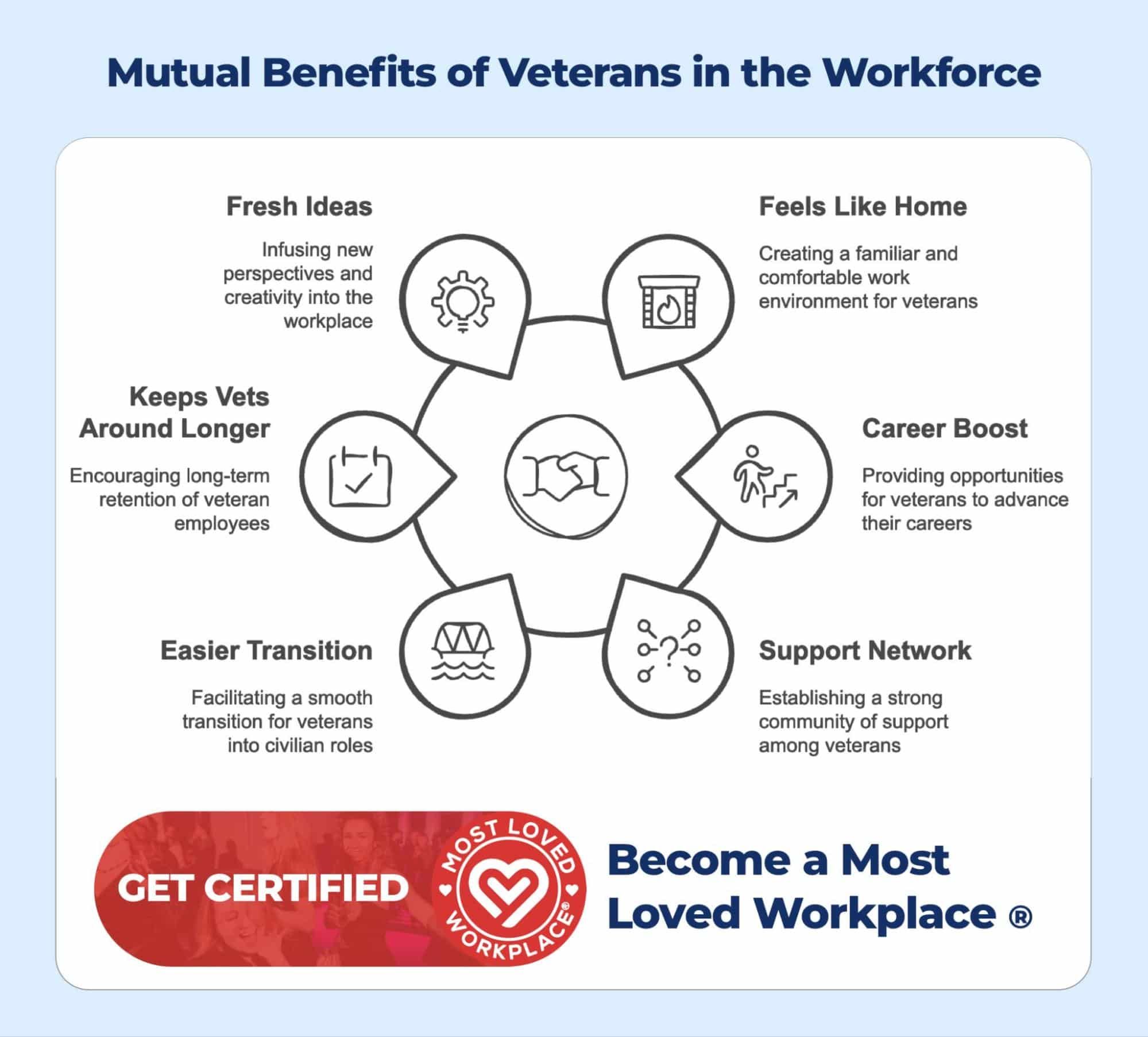
Employee Resource Groups (ERGs) for veterans can be a game-changer. They give vets that sense of community they often miss after leaving the military.
Want to set up an effective veteran ERG? Here’s how:
- Set clear goals (like boosting retention or career growth)
- Get the big bosses on board
- Give the group a budget and time to meet
- Keep tabs on how it’s helping (think retention rates, job satisfaction)
Check out this quick breakdown of ERG benefits:
|
For Veterans
|
For the Company
|
|---|---|
|
Feels like home
|
Keeps vets around longer
|
|
Career boost
|
Fresh ideas
|
|
Support network
|
Team players
|
|
Easier transition
|
Different viewpoints
|
Take Amazon’s Warriors ERG, for example. It’s not just for vets – it includes their families and supportive coworkers too. They network, help the community, and smooth the path for new veteran hires.
Setting Up Mentor Programs
Mentors are HUGE for vets moving into civilian jobs. The Department of Veteran Affairs even found that mentoring was the #1 program vets wanted when transitioning.
Here’s the secret sauce for a great mentorship program:
• Match vets with civilian pros
• Set clear goals (career growth, networking, office know-how)
• Train those mentors
• Check in often
As Mary Leone, a talent pro, puts it:
“No veteran mentoring program at your company? Start NOW! It’s a game-changer for keeping vets around past that first job.”
Don’t want to start from scratch? Team up with groups like Veterati, American Corporate Partners (ACP), or Four Block. They’re pros at this stuff.
Offering Work Options
Flexibility is key for vets adjusting to civilian life. Try these:
• Flex schedules for VA appointments
• Remote work for those who need quiet
• Gradual return-to-work for injured vets
• Job sharing for those easing back in
Mental Health Resources
Mental health support is crucial. Here’s how to nail it:
- Train your team on vet-specific issues
- Bring in pros who get the veteran experience
- Set up peer support groups
- Get an Employee Assistance Program with vet resources
- Allow mental health days
Here’s a sobering fact: 1.7 million vets have been diagnosed with mental health needs, but almost half don’t get help. Your support could change that.
Training Better Leaders
Creating a veteran-friendly workplace goes beyond just hiring. It’s about building an environment where veterans can thrive. Here’s how we can train our leaders to support veterans effectively:
Military Background Training
Leaders need to understand military life and culture. This knowledge bridges the gap between military and civilian worlds.
Good military background training covers:
|
Topic
|
Purpose
|
|---|---|
|
Military structure
|
Understand veterans' previous work environment
|
|
Common military terms
|
Improve communication
|
|
Military values and ethics
|
Grasp veterans' work ethic
|
|
Deployment experiences
|
Build empathy
|
The Department of Labor’s “America’s Heroes at Work” toolkit is a great resource. It covers hiring and supporting veterans, including those with PTSD or traumatic brain injury (TBI).
Converting Military Skills
Veterans often struggle to translate their military experience into civilian terms. Managers can help by:
- Learning to read military resumes and job descriptions
- Identifying transferable skills (like leadership and problem-solving)
- Helping veterans explain their experiences in civilian terms
R. Matthew Croslin, a retired Lieutenant Colonel, says:
“Military leadership skills do translate to the civilian workforce. Leadership is leadership and experience is experience and military leaders bring both to the table.“
Career Growth Plans
Veterans need clear paths for advancement. Without them, they often leave quickly – nearly half leave their first post-military job within a year.
To create good career growth plans:
• Ask about career goals
• Find opportunities that fit their skills and interests
• Provide mentorship from experienced civilian leaders
• Offer training for higher-level skills
But remember, not all veterans want to be managers. Lida Citroën, an author and consultant, shares:
“A retiring Air Force Colonel told me, ‘I wish people would stop assuming I want to lead in my next job. I just want to contribute and go home at night knowing I added value.”
Ways to Show Thanks
Honoring military service in your company culture makes veterans feel valued. Try these:
• Celebrate Military Appreciation Month (May)
• Recognize Veterans Day
• Create a “Wall of Honor” for veteran employees
• Offer extra paid time off for VA appointments or Reserve duties
Bart Womack, Veteran Strategy Officer at Randstad, says:“Veteran hiring is a mindset and a culture shift. The companies that excel at hiring veterans have mastered this shift from the top down.“
Checking What Works
You need to know if your veteran support programs are doing their job. Here’s how to measure success and make improvements based on data:
How to Measure Success
To see if your veteran initiatives are working, use these tools:
|
Metric
|
What it means
|
Why It's Important
|
|---|---|---|
|
Retention Rate
|
% of vets staying past year one
|
Shows if vets are happy and programs work
|
|
Career Progression
|
Promotions and moves for vet employees
|
Tells you if vets are growing in the company
|
|
Engagement Scores
|
Results from vet-specific surveys
|
Gives direct feedback on vet experience
|
|
Performance Ratings
|
How vets perform vs. non-vets
|
Shows the value of hiring vets
|
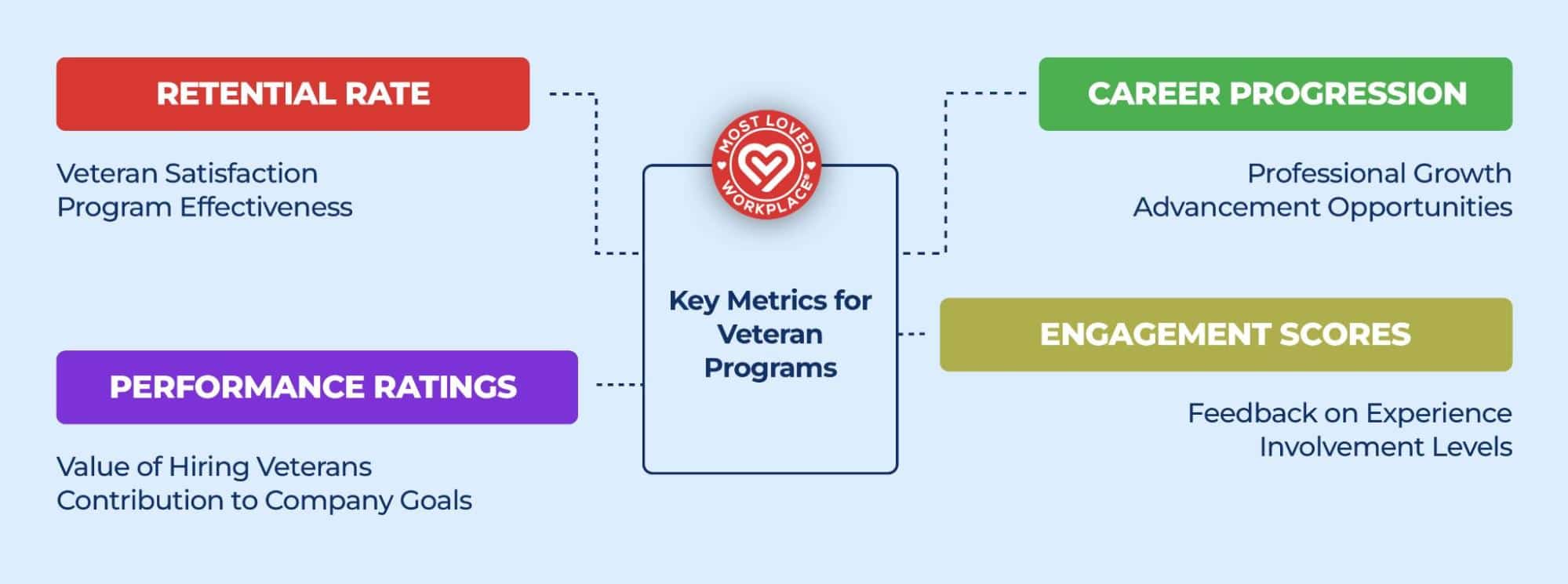
SHRM says 68% of employers think vets perform better than non-vets. Track these metrics to see how your company stacks up.
Getting Veteran Input
Want to know what vets really think? Try these methods:
- Anonymous Surveys: Use tools like the VA All Employee Survey for honest feedback.
- Focus Groups: Have small group chats to dig into specific issues.
- One-on-One Talks: Check in with vet employees regularly to understand their needs.
- Exit Interviews: Learn from vets who are leaving to spot areas to improve.
“Exit interviews are gold mines of information. They often reveal blind spots in your veteran support programs that current employees might be hesitant to share.” – Mary Leone, talent acquisition expert
Keeping Score
Track these KPIs to see how your vet program is doing:
• % of new hires who are vets
• % of vets promoted within 2 years
• % of vets finishing skill development programs
• % of vets in mentorship programs
• Hours vets spend volunteering through company programs
Make a dashboard to watch these KPIs. Update it every 3-6 months to spot trends.
Making Things Better
Always aim to improve. Here’s how:
- Look at Your Data: Check your KPIs and feedback often.
- Set Clear Goals: Make specific, measurable goals for improvement.
- Make Changes: Use what you’ve learned to tweak your programs.
- Check Again: After changes, see if they worked.
- Compare Yourself: See how you stack up against other companies.
Veteran support is an ongoing job. Bradley-Morris found that Proseal America‘s vet hires were outpacing others in skill growth after just one year. That shows what good vet programs can do.
Final Thoughts
Supporting veterans in the workplace isn’t just good karma – it’s smart business. Let’s recap the key points and see how to make these efforts stick.
Here’s why supporting vets at work is a win-win:
|
For Veterans
|
For Companies
|
|---|---|
|
Easier shift to civilian life
|
Top-notch talent pool
|
|
Career advancement
|
Better employee retention
|
|
Feeling of purpose
|
Stronger teams
|
|
Mental health backup
|
More diverse, innovative workforce
|
Making It Stick
Want your vet support to go the distance? Here’s how:
- Bake it into your culture
Don’t just talk the talk. Make vet inclusion part of your company’s DNA. Jim Beamesderfer from Prudential Financial nails it:
“We don’t hire military talent out of charity. We do it because it makes great business sense.“
- Keep tweaking
Don’t set it and forget it. Keep an eye on things like retention rates and career progress to see what’s working.
- Team up with vet groups
Build solid relationships with organizations that help vets find jobs. Fiserv, for example, backs the Institute for Veterans and Military Families at Syracuse University.
- Grow your leaders
Give vets a clear path up the ladder. CACI‘s got a smart move with their Veteran Transition mentoring program, pairing seasoned vets with newbies.
- Flex when needed
Monster’s survey shows workers today want flexibility. Offer remote options and flexible hours to help vets juggle things like VA appointments.
Supporting vets isn’t a one-and-done deal. Keep at it, listen to feedback, and you’ll build a workplace where vets can shine and put their skills to work.
William Davidson, a retired Command Sergeant Major now working with Home Base, puts it well:
“When it comes to veterans, recognizing the service and sacrifice of these individuals to serve our country is essential.“
FAQs
How to support veterans in the workplace?
Supporting veterans at work is key for their success and career growth. Here are 8 ways to create a veteran-friendly workplace:
- Skills-based hiring: Match military skills to civilian jobs
- Clear company mission: Show how their work matters
- Team building: Build a sense of belonging
- Structured frameworks: Set up clear onboarding processes
- Veteran ambassadors: Let experienced vets mentor new hires
- Employee resource groups: Create vet support networks
- Include military spouses: Tap into military family talent
- Mental health benefits: Offer full support for vet well-being
These strategies can boost vet retention and job satisfaction. Take Johnson & Johnson, for example. They set up a Veterans Leadership Council to help vets connect and grow while addressing their health needs.
Tom Kastner from Wounded Warrior Project® (WWP) says:
“Veterans were trained to adapt and overcome various challenges, and those distinctive qualities are not lost as they navigate their civilian career journey.“
By recognizing these qualities and offering targeted support, companies can tap into the skills vets bring to civilian work.
Supporting vets is ongoing. Keep checking your initiatives and ask vet employees for feedback. This way, you’ll create a workplace where vets thrive and add their unique strengths to your company’s success.

Building a Thriving Workplace Culture!
Discover how to leverage the right technology and implement a proactive strategy that cultivates talent and facilitates team collaboration.
Take the next step on your employer brand
Three ways to move from reading to results. Pick what fits your stage.
Run your CertCheck report
See how AI systems currently describe your employer brand to candidates.
Get My Free ReportApply for certification
Measure your organization on the Love of Workplace Index® and join 1,800+ certified companies.
Start ApplicationTalk to a Strategic Advisor
Walk through your Employer Branding & Certification Insights report with a specialist.
Keep reading
Building a Caregiver-Friendly Workplace: Why It Matters More Than Ever
Building a Caregiver-Friendly Workplace: Why It Matters More Than Ever Direct Answer A caregiver-friendly workplace is an organization that designs policies, manager practices, and measurement systems to support employees with ongoing caregiving responsibilities while maintaining productivity and retention. Research shows caregiving affects a majority of full-time employees and directly reduces work hours, focus, and retention […]
How Most Loved Workplaces® Support Working Parents in the Modern Workplace
How Most Loved Workplaces® Support Working Parents in the Modern Workplace Why Family Support Matters in Today’s Workplace Most Loved Workplace®–certified organizations recognize that working parents face persistent challenges in balancing professional and family responsibilities. Research from Deloitte shows that 95% of women say workplace flexibility is critical to managing work and home demands. When […]
Employee Well-Being Strategy: Building a Workplace Where People Thrive
Employee Well-Being Strategy: Building a Workplace Where People Thrive Employee well-being is no longer a “nice to have.” It is becoming a core part of how companies protect performance, retain talent, and earn trust. Workplace stress is already widespread. The American Psychological Association’s 2023 Work in America survey found that 77% of workers reported work-related […]