Uncovering Hidden Bias: Essential Questions to Ask About Company Culture and Workplace Diversity
Uncovering Hidden Bias: Essential Questions to Ask About Company Culture and Workplace Diversity 8 min. read. Workplace bias hurts diversity and company culture. It’s often unconscious, affecting decisions and interactions without us realizing it. Here’s what you need to know: • Bias leads to unfair treatment and limits opportunities • Diverse teams are 35% more […]
Uncovering Hidden Bias: Essential Questions to Ask About Company Culture and Workplace Diversity
8 min. read.
Workplace bias hurts diversity and company culture. It’s often unconscious, affecting decisions and interactions without us realizing it. Here’s what you need to know:
• Bias leads to unfair treatment and limits opportunities
• Diverse teams are 35% more productive and earn 19% more revenue
• Women are 30% less likely to get leadership roles than equally qualified men
To fight bias, companies should:
- Train employees to spot their own biases
- Use fair hiring practices
- Review policies for fairness
- Encourage open discussions about diversity
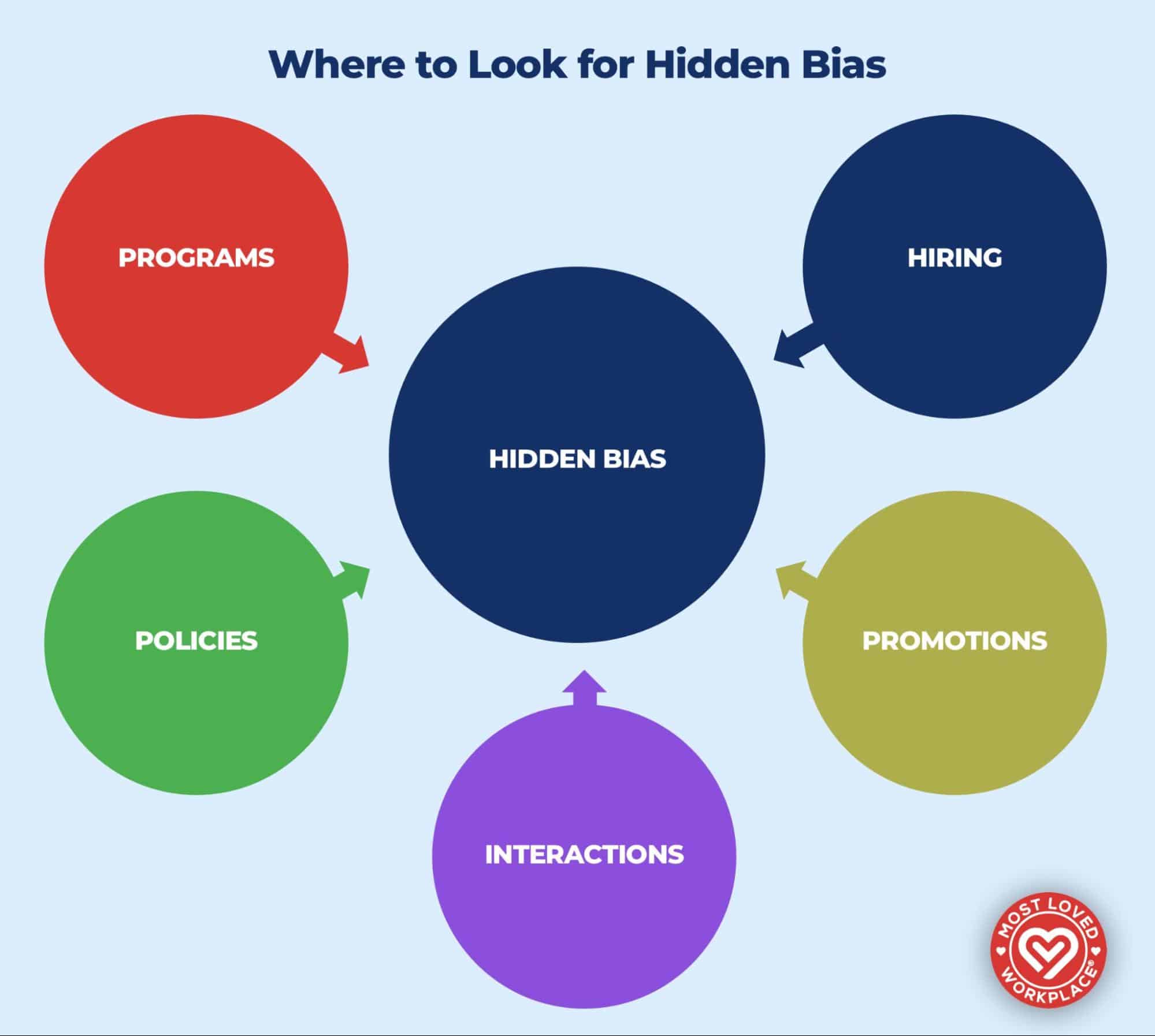
Key areas to check for hidden bias:
Table of Contents
|
Area
|
What to Look For
|
|---|---|
|
Hiring
|
Job ad language, interview questions
|
|
Promotions
|
Who gets ahead, who's left behind
|
|
Policies
|
Parental leave, flexible work, benefits
|
|
Interactions
|
Who speaks in meetings, gets credit
|
|
Diversity Programs
|
Effectiveness, participation
|
To address bias:
- Create an action plan with clear goals
- Develop thorough, ongoing training
- Hold leaders accountable for diversity
- Use data to guide decisions
- Open up communication channels
Remember: Fixing bias takes time. Stay committed, listen to feedback, and keep pushing for change.
“Uncovering hidden biases in company culture isn’t just about identifying what’s missing—it’s about fostering genuine emotional connections. At Most Loved Workplace®, we focus on creating environments where every employee feels valued, heard, and safe to express themselves. This approach goes beyond standard engagement measures, offering up to 40% higher results in emotional connectedness. It’s not just about boosting morale—it’s a strategic advantage that drives innovation, retention, and a deep commitment from employees, setting a new industry standard.”
— Louis Carter, CEO of Most Loved Workplace®
Addressing Bias and Discrimination: Strategies for a Fair Workplace
What is Unconscious Bias?
Unconscious bias is like a sneaky filter in your brain. It shapes how you see and treat others without you even realizing it. These biases come from your life experiences and what you see around you.
Common Types of Bias
Here are some biases that often show up at work:
- Affinity Bias
We like people who are like us. This can lead to unfair hiring.
Example: A hiring manager picks candidates from their old school, even if they’re not the best fit.
- Gender Bias
This is treating people differently based on gender.
|
Example
|
Impact
|
|---|---|
|
Thinking men are better leaders
|
Only 25% of C-suite roles are held by women
|
|
Calling assertive women "bossy"
|
Women are 30% less likely to get promoted to management
|

Building a Thriving Workplace Culture!
Discover how to leverage the right technology and implement a proactive strategy that cultivates talent and facilitates team collaboration.
- Age Bias
Judging people based on age hurts both older and younger workers.
About two-thirds of workers over 50 say they face age discrimination at work.
- Attribution Bias
Explaining someone’s actions based on who we think they are, not the facts.
Example: Thinking a coworker is lazy because they’re late, without knowing they might have childcare issues.
How It Affects Work
Unconscious bias can mess up a workplace:
• People miss out on jobs or promotions they deserve
• Some workers feel left out or undervalued
• Teams lose out on diverse ideas and better solutions
• People who feel discriminated against are more likely to quit
A Deloitte survey found 39% of employees deal with unconscious bias at least monthly. And 68% said it hurts their productivity.
To fight these biases, companies need to:
- Train employees to spot their own biases
- Use fair hiring practices (like removing names from resumes)
- Set clear diversity goals
- Create a culture where everyone feels valued
Where to Look for Hidden Bias
Hidden bias can pop up all over the workplace. Here’s how to spot it:
Hiring Process
Job ads and interviews can be sneaky bias hotspots. Watch out for:
• “Rockstar” or “ninja” in job descriptions (turns off women)
• Questions like “Planning a family?” or “Can you handle long hours?” (age/gender bias)
Promotions and Leadership
Who’s climbing the ladder? If certain groups always get left behind, that’s fishy.
“Managers might focus on younger employees for growth, ignoring older, qualified candidates.” – Najeeb Khan, TeamLand Founder
Company Policies and Benefits
|
Policy
|
Bias Red Flag
|
|---|---|
|
Parental Leave
|
One gender favored
|
|
Flexible Work
|
Assuming caregiving roles
|
|
Health Insurance
|
Excluding specific treatments
|
Workplace Interactions
Notice who talks in meetings and gets credit. Watch for microaggressions like always asking the person of color where they’re “really from.”
Diversity Programs
Do your diversity efforts actually work? Or are they just for show?
|
Program
|
Check This
|
|---|---|
|
Mentorship
|
Who gets top leaders?
|
|
Training
|
Everyone required?
|
|
Hiring Goals
|
Met and celebrated?
|
Questions to Ask About Bias
Want to spot hidden bias at work? Ask these questions:
For Company Leaders
- How diverse is our leadership?
- Do we have clear DEI goals?
- Are we funding DEI initiatives?
- How often do we check policies for bias?
For HR Teams
|
Area
|
Questions
|
|---|---|
|
Hiring
|
Are job posts gender-neutral?
|
|
Promotions
|
Do we track promotion rates by demographics?
|
|
Training
|
Is bias training required?
|
|
Data
|
How often do we analyze diversity stats?
|
For Employees
- Are your ideas valued, regardless of background?
- Seen or felt any microaggressions?
- Equal career chances for all?
- Comfortable talking diversity with your boss?
For Customers and Community
- Does marketing show diversity?
- How do we engage diverse communities?
- Are products/services accessible to all?
- Do we speak up on social issues?
“The only way to understand [unconscious bias] is to experience it.” – Target Training GmbH
This quote shows why it’s key to help employees face their own biases.
To act on these questions:
- Use standard forms, not resumes, to limit personal info in hiring.
- Include diverse people on interview panels.
- Switch up who leads meetings.
- Use data to back decisions, not gut feelings.
How to Address Discovered Bias
Found bias in your workplace? Here’s how to tackle it:
- Create an action plan
Set clear goals. Example: “Boost leadership diversity by 20% in 12 months.“
Steps to get there:
• Update hiring practices
• Roll out bias training
• Start mentorship programs
- Develop solid training
Go deep, not just surface-level. Cover:
• Spotting unconscious bias
• Avoiding microaggressions
• Improving cross-cultural communication
Make it ongoing, not a one-off. Why? McKinsey‘s 2020 report shows companies with gender-diverse exec teams are 25% more likely to see above-average profits.
3. Keep leaders in check
|
Action
|
Why it matters
|
|---|---|
|
Set DEI goals for leaders
|
Ensures top-down commitment
|
|
Include DEI in performance reviews
|
Links progress to career growth
|
|
Leaders must sponsor diverse talent
|
Helps underrepresented groups advance
|
- Let data guide you
Regularly collect and analyze diversity data to:
• Find weak spots
• See progress
• Make smart DEI choices
- Open up communication
Create safe spaces for bias discussions:
• Employee resource groups
• DEI town halls
• Anonymous feedback options
Remember: Fixing bias is a marathon, not a sprint. Stay the course, listen to feedback, and keep pushing forward.
“Awareness training is the first step to unraveling unconscious bias because it allows employees to recognize that everyone possesses them and to identify their own.” – Francesca Gino, Harvard Business School Professor
Tracking Improvements
To boost diversity and inclusion, you need to measure it. Here’s how:
- Set clear goals
Define what DEI means for your company. Get input from all levels to avoid bias. Set specific, measurable goals like:
“Boost women in leadership by 20% in 18 months.”
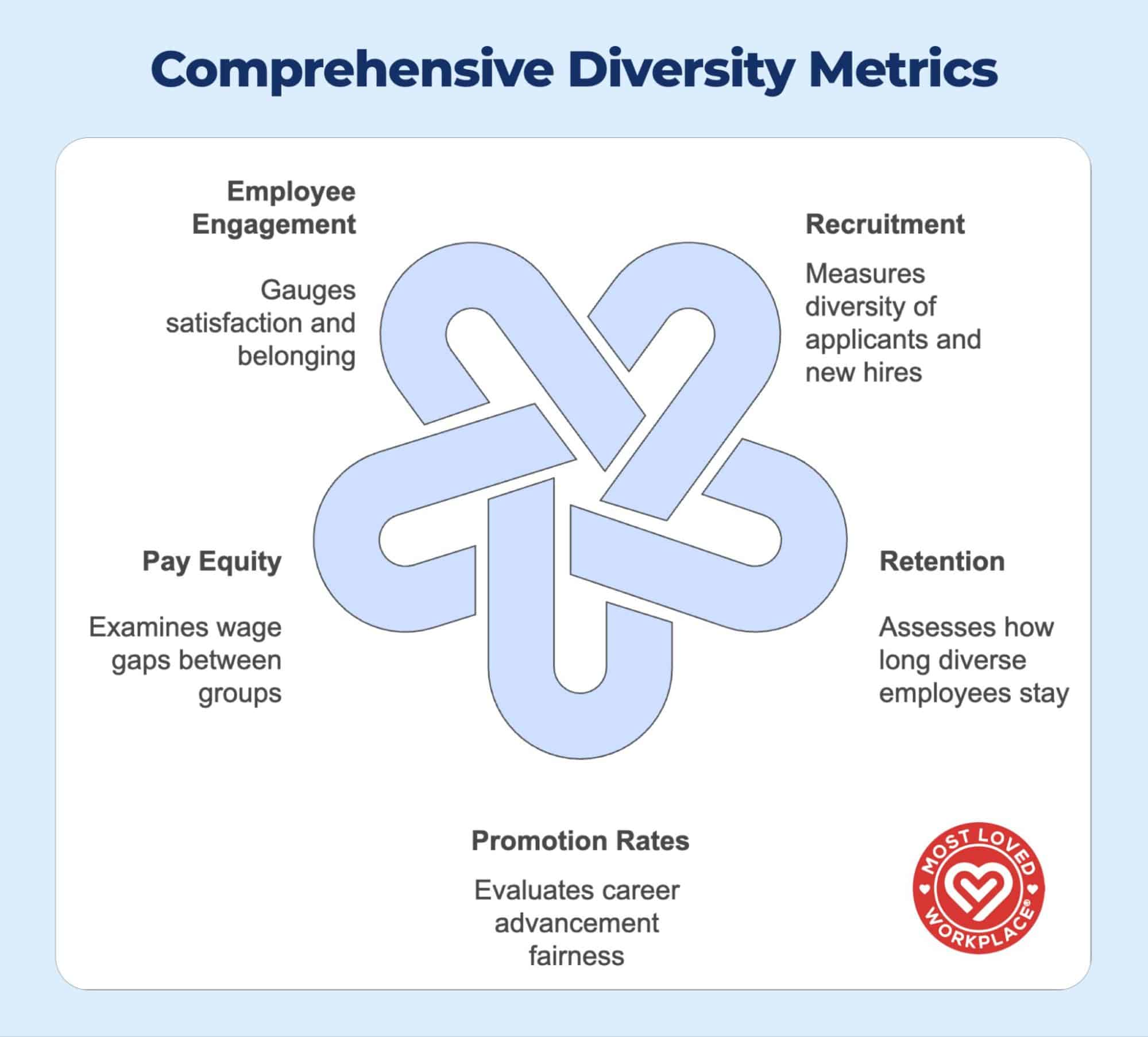
- Choose your metrics
Pick metrics that match your goals:
|
Metric
|
Measures
|
|---|---|
|
Recruitment
|
Diversity of applicants and new hires
|
|
Retention
|
How long diverse employees stay
|
|
Promotion rates
|
Career advancement fairness
|
|
Pay equity
|
Wage gaps between groups
|
|
Employee engagement
|
Satisfaction and belonging
|
- Collect data regularly
Gather demographics throughout the employee lifecycle. Use surveys for inclusion feedback. Protect privacy and follow laws.
- Analyze and act
Spot trends and gaps. Use these to fine-tune your DEI strategy.
- Report progress
Share findings with everyone. Be open about wins and weak spots.
- Refine your approach
Keep reviewing how you measure DEI. As your company grows, your metrics might need to change too.
DEI tracking is ongoing. It takes time, but consistent measurement is crucial for real change.
“DEI metrics are powerful for tracking progress and prioritizing initiatives. Don’t just focus on numbers – look at the story the data tells about your DEI efforts.” – Marna van der Merwe, AIHR Expert
Conclusion
Tackling workplace bias isn’t a quick fix. It’s a long-term commitment to building a fair work culture.
Companies are shifting their DEI approach. Some have faced pushback and scaled back initiatives. Tractor Supply Company, for instance, stopped sponsoring pride festivals after customer complaints.
But DEI isn’t going away. It’s evolving to align with business goals. As Rachael McCann Jones from WTW says:
“DEI is here to stay—even if the name of the role or words to describe it shifts.“
To make progress:
• Set clear DEI goals
• Train on unconscious bias
• Use structured hiring
• Create employee resource groups
• Check progress regularly
Diversity isn’t just numbers. It’s about creating a workplace where everyone thrives. This takes work, but it pays off.
Diverse companies often perform better. McKinsey found they were 35% more likely to have above-average financial returns.
The key? Keep learning, listen to feedback, and take action. This builds workplaces that are fairer AND more successful.
FAQs
Which of the following is an example of unconscious bias?
Unconscious bias sneaks into the workplace in many ways. Here are some common culprits:
• Racial bias
• Gender bias
• Age bias
These biases often fly under the radar. A hiring manager might lean towards candidates who look like them, without even realizing it. It’s not always intentional, but it happens.
How would you assess diversity in the workplace?
Checking your workplace diversity isn’t a guessing game. Here’s a solid game plan:
- Set clear DEI goals
What do you want to achieve? Be specific.
- Pick your metrics
Choose what you’ll measure. Could be gender ratios, racial diversity, age ranges, etc.
- Set targets
Where do you want to be in 6 months? A year?
- Assign tasks
Who’s doing what? Make it clear.
- Keep tabs on the data
Regular check-ins are key.
- Mind the privacy
Make sure you’re not crossing any lines with data collection.
Take FDM Group, for example. They put out a yearly gender pay gap report. It’s a great way to show they’re serious about equal opportunity and DEI.
How to incorporate DEI principles in HR interviews?
Want to bake DEI into your interviews? Try these questions:
• “What’s diversity mean to you? Why’s it matter?”
• “How do you see inclusion playing out at work?”
• “Tell me about a time you worked with a diverse team.”
These help you get a feel for how candidates think about DEI. Also, ask how they’ve handled DEI-related challenges in the past. It’ll give you a real-world peek at their approach.
If you’re looking to stay on the education train, then allow us to recommend this post from our blog on 5 Steps to achieve Most Loved Workplace® Certification
Take the next step on your employer brand
Three ways to move from reading to results. Pick what fits your stage.
Run your CertCheck report
See how AI systems currently describe your employer brand to candidates.
Get My Free ReportApply for certification
Measure your organization on the Love of Workplace Index® and join 1,800+ certified companies.
Start ApplicationTalk to a Strategic Advisor
Walk through your Employer Branding & Certification Insights report with a specialist.
Keep reading
What AI Finds When It Looks for Your Employer Brand
What AI Finds When It Looks for Your Employer Brand Something has changed in how candidates research employers. It happened gradually and then all at once. A candidate considering whether to apply to your company no longer starts with your careers page. They ask an AI system. They type something like ‘what’s it like to […]
Why Employers Lose the Talent War They Should Win
Why Employers Lose the Talent War They Should Win There’s a pattern in the LOWI data that deserves more attention than it gets in conversations about healthcare workforce strategy. Healthcare organizations, for example, consistently score among the highest on emotional connectedness across any sector in the certified population. The mission is real and operative. Employees […]
The Mission Gap: Why the Organizations With the Strongest Cultures Are the Hardest to Find
The Mission Gap: Why the Organizations With the Strongest Cultures Are the Hardest to Find There’s a pattern in the LOWI data that shows up consistently across sectors and has nothing to do with the quality of the culture itself. Mission-driven organizations, whether in energy services, industrial manufacturing, food service, education, or healthcare, score among […]