

Contents
hide
Why Young Professionals Choose Where They Work Before They Ever Apply
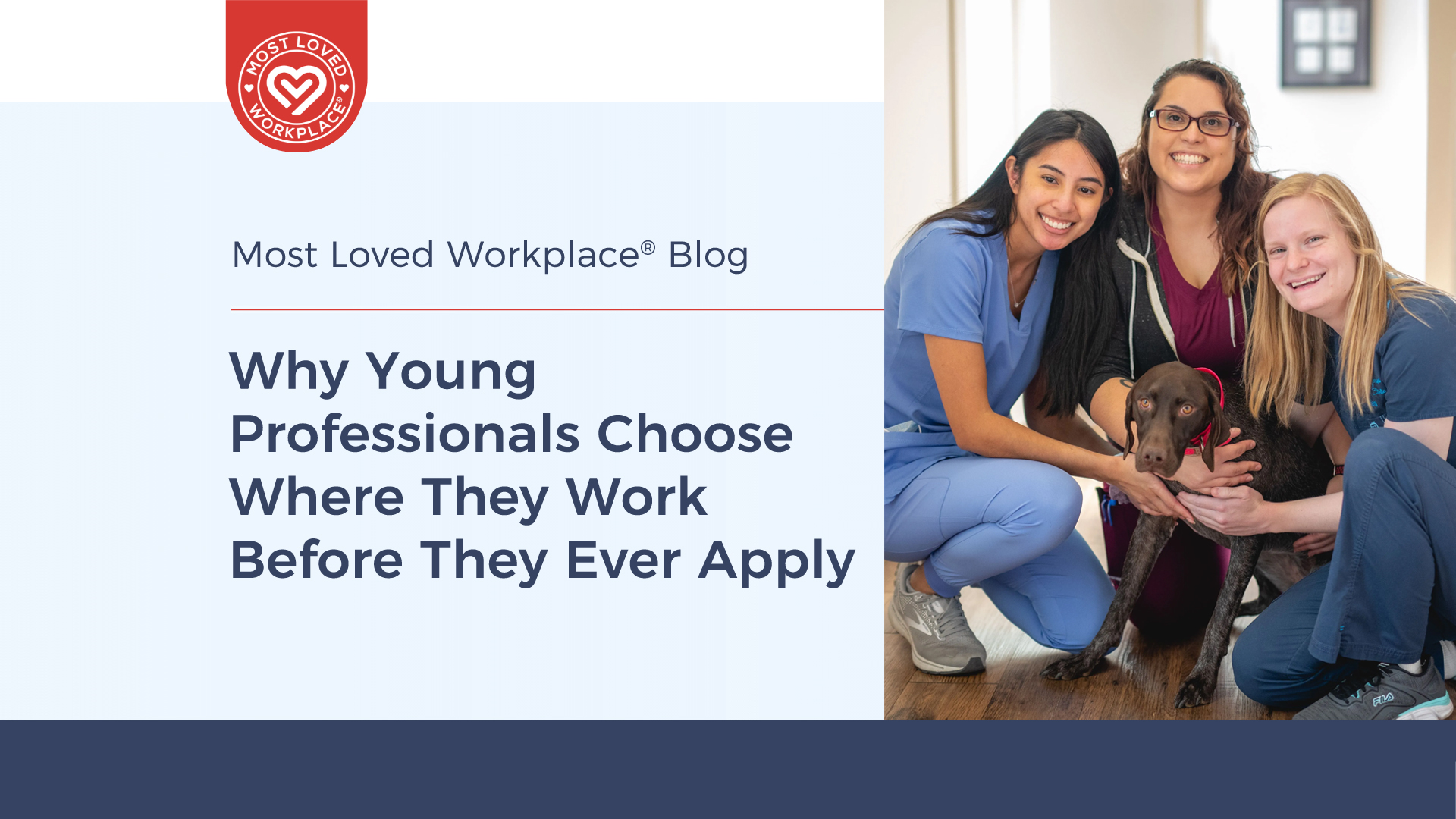
Every year, veterinary schools in the United States graduate a limited number of new veterinarians into a field with far more open positions than available candidates. The supply crisis in veterinary medicine isn’t new. What’s changed is how new vets, the vet techs and other professionals who support clinical practice, and professionals in other industries, decide which employers are worth their time.
They don’t wait to experience your culture to evaluate it. They research before they apply. They ask AI systems directly: ‘what’s it like to work at this practice group’ or ‘is this a good employer for new vets.’ They look for third-party verification that what you say about your culture is actually true. And what they find, or don’t find, in that research phase determines whether they apply to you or the clinic down the road.
This is why a regional multi-clinic network can out-recruit national chains that have orders of magnitude more locations, more recruiters, and more paid media spend. Size isn’t the deciding factor in the employer brand competition, especially for young professionals. Verified proof is.
What the Competitor Intel Scoreboard Shows
The Best Practice Institute‘s Competitor Intel scoreboard measures eight dimensions of employer brand visibility. It runs these metrics against peer competitors and returns a comparative score.
Mission Pet Health, a certified Most Loved Workplace® and recognized on the Top Most Loved Workplaces® For Young Professionals 2026 list, scored 78 out of 100. The peer chain average scored 45 out of 100. A 33-point gap, in favor of a multi-clinic network competing against national chains with significantly larger recruiting infrastructure.
The gap comes down to three differentiators. Culture Visibility: Mission Pet Health is rated Culture-Led. Its peer chains are rated Balanced. AI Presence: Mission Pet Health is Third-Party Validated. Its peer chains are Self-Reported Only. Certification: Mission Pet Health is MLW Certified. Its peer chains hold no equivalent certification.
None of those differentiators require more headcount or more paid media. They require building the verification infrastructure that makes an employer’s culture findable, accurate, and trustworthy in the places professionals actually look.
What Professionals Are Actually Looking For
The research on early-career candidate behavior is consistent. Young (and other) professionals in competitive fields, veterinary medicine being one of the clearest examples, have high standards for what counts as credible employer information. They’ve grown up evaluating sources. They know that a company’s careers page is self-reported. They know that a generic ‘we value our people’ mission statement costs nothing to write.
What they trust is independently verified evidence. A certification administered by an organization with a validated methodology. A badge in the careers page hero that was earned rather than purchased. Published culture content anchored in real employee data from a recognized research authority. AI-generated answers built from third-party signals rather than marketing copy.
Mission Pet Health’s Most Loved Workplace® badge sits in the recruiting hero of its careers page, visible in the first viewport for every candidate who lands there. Its employer brand content is indexed and structured specifically to appear in AI answers when candidates research veterinary employers. When a new vet asks an AI system what it’s like to work at Mission Pet Health, the answer draws from verified, independently sourced data. When that same candidate researches the peer chains, the answer draws from self-reported content or returns nothing credible at all.
The Young Professionals List as a Recruitment Signal
Recognition on the Top Most Loved Workplaces® For Young Professionals 2026 list does something specific for Mission Pet Health’s early-career recruitment: it creates a publicly verifiable, independently awarded signal that the organization is a genuinely good place for early-career professionals to build their careers. Not just a good employer in general. Specifically a good place for someone at the beginning of their professional life.
That distinction matters in veterinary medicine, where the decision about which employer to join at the start of a career has long-term consequences. New vets are making a decision about mentorship, surgical training access, career growth pathways, and culture fit. They want to know that those things are real, not aspirational. The Young Professionals list recognition, backed by The Best Practice Institute’s validated methodology, is evidence they can cite.
What This Means for Your Organization
If your organization competes for professionals in any field, the question worth asking isn’t whether your culture is genuinely good. Most organizations reading this have done real culture work. The question is whether a new graduate researching you tonight finds independently verified proof of that culture in the places they actually look.
Find out in 60 seconds whether you qualify.
Win the candidates your competitors are losing.
Find out in 60 seconds whether you qualify.
Most Loved Workplace® has certified 1,800+ companies across millions of employees. Our research appears in the Wall Street Journal and The Economist. Lou Carter is the author of 12 bestselling leadership books. mostlovedworkplace.com
© Most Loved Workplace® / Best Practice Institute. All rights reserved.

Louis Carter is the founder and CEO of Best Practice Institute, Most Loved Workplace, and Results-Based Culture. Author of In Great Company, Change Champions Field Guide, and Best Practices in Talent Management, as well as a series of Leadership Development books. He is a trusted strategic advisor and coach to CEOs, CHROs, and leaders of mid-sized to F500 companies – enabling change and steering employer brand development together with highly effective teams, leaders, and organizations as a whole.


0 Comments